
Healthcare is undergoing a massive transformation. Patients now expect the same seamless digital experiences from their medical providers as they do from their favorite retail brands. This shift has placed an enormous emphasis on creating tools that are not only functional but also intuitive and secure.
Building a successful medical application requires more than just good coding. It requires a deep understanding of human behavior, strict regulatory environments, and the complex realities of clinical workflows. This intersection is where digital health product design and development truly matters. When executed correctly, these digital tools can streamline administrative tasks, improve patient adherence, and ultimately save lives.
However, creating software for the medical field is notoriously difficult. A simple usability flaw in a standard app might cause frustration; in a healthcare app, it could lead to an incorrect dosage or missed diagnosis. That is why following a rigorous, user-centered approach is absolutely essential for anyone looking to launch a successful health tech solution.
The Core of Digital Health Product Design and Development
Creating a digital health tool starts with understanding the unique constraints and opportunities of the medical sector. Designers and developers must balance cutting-edge technology with the strict realities of patient care.
Bridging Healthcare and Technology
The most effective medical applications act as a seamless bridge between complex medical data and the everyday user. Patients often feel overwhelmed by medical jargon, treatment plans, and appointment schedules. Good design translates this overwhelming information into clear, actionable steps.
For doctors and nurses, the goal is slightly different. Clinicians suffer from extreme burnout, often driven by clunky electronic health record (EHR) systems. A well-designed product respects their time, reducing clicks and presenting critical patient data exactly when it is needed.
Empathy at the Center of the Experience
Empathy is a foundational element in this space. Users of health apps are often experiencing stress, illness, or anxiety. The interface must reflect a calm, reassuring tone. Large text, clear navigation, and soothing color palettes are not just aesthetic choices; they are functional requirements for users who might have visual impairments or cognitive overload.
Key Stages in the Digital Product Design Process
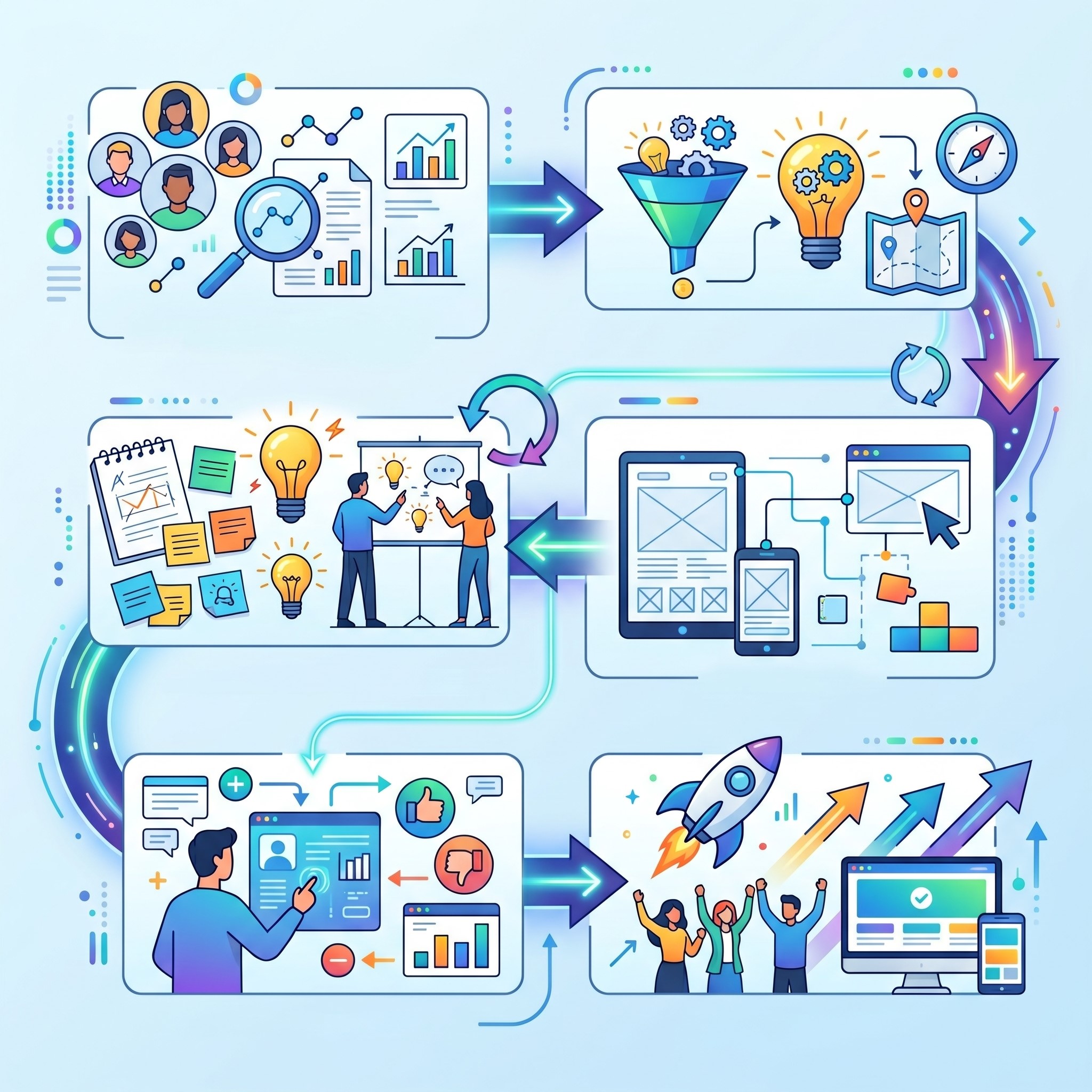 Moving an idea from a rough concept to a fully functioning medical application requires a structured methodology. The digital product design process in healthcare is highly iterative, constantly folding user feedback back into the core design.
Comprehensive Research and Discovery
Before writing a single line of code, teams must immerse themselves in the end-user’s environment. This means interviewing patients, shadowing nurses during their shifts, and understanding the specific pain points of hospital administrators. You need to know exactly how the proposed tool fits into a patient’s daily routine or a doctor’s busy clinic schedule.
Prototyping and User Testing
Once the research is complete, teams move to wireframing and prototyping. In healthcare, testing these prototypes early and often is vital. You might discover that elderly patients struggle to find the “schedule appointment” button, or that a physician finds a specific data visualization confusing. Catching these usability issues during the prototyping phase saves significant time and money.
Regulatory Compliance and Security
You cannot discuss health tech without addressing compliance. Regulations like HIPAA in the United States or the GDPR in Europe govern how personal health information is stored, transmitted, and displayed. The design must incorporate security measures naturally, such as secure login screens, auto-logout features, and clear consent forms, without making the application impossible to use.
Formulating a Winning Digital Product Design and Strategy
A beautiful interface means very little if the product does not serve a viable business purpose or scale effectively. Developing a robust digital product design and strategy ensures the application meets both clinical needs and long-term organizational goals.
Aligning Business Goals with Patient Needs
Every successful health application solves a specific problem for the patient while delivering value to the healthcare provider. For example, a remote patient monitoring app helps patients track their blood pressure from home. Simultaneously, it helps the hospital reduce readmission rates, satisfying a major business objective. Your strategy must clearly map out these dual benefits.
Scalability and Future-Proofing
Healthcare technology evolves rapidly. The strategy behind your product should account for future integrations. Can the application connect with emerging wearable devices? Is the backend architecture flexible enough to support machine learning algorithms for predictive diagnostics in the future? Planning for scalability ensures the product remains relevant years after its initial launch.
Why Partner with a Digital Product Design Studio?
 Many healthcare organizations possess incredible clinical knowledge but lack the technical skills to build top-tier software. This is a common hurdle, and it is exactly why bringing in outside experts can make all the difference.
Access to Specialized Expertise
Working with a specialized digital product design studio provides immediate access to professionals who understand the nuances of health tech. These teams bring seasoned UX researchers, compliance experts, and software engineers who have successfully launched similar medical platforms. They know how to navigate the FDA approval process for software as a medical device (SaMD) and understand the intricacies of HL7 and FHIR interoperability standards.
Accelerating Time to Market
Building an internal tech team from scratch takes months. A dedicated design studio accelerates the development timeline, utilizing established frameworks and agile methodologies. This speed allows healthcare startups and established hospital systems to launch their products faster, gather real-world feedback, and iterate quickly.
Common Pitfalls to Avoid in Healthcare App Development
Even with the best intentions, health tech projects can fail. Avoiding these common mistakes will significantly increase your chances of success:
- Ignoring Interoperability: A health app that cannot communicate with existing EHR systems is an island. Data must flow freely and securely between your app and the hospital’s main database.
- Feature Creep: It is tempting to add every possible feature into version one. Focus on a strong Minimum Viable Product (MVP) that solves one core problem perfectly before adding secondary tools.
- Overlooking Accessibility: Medical apps must be accessible to everyone, including those with disabilities. Ensure your design complies with WCAG (Web Content Accessibility Guidelines) standards.
The Growing Role of Artificial Intelligence in Digital Health
Artificial intelligence is rapidly transforming digital health product design and development. Modern healthcare applications now use AI-powered systems to analyze patient behavior, predict medical risks, and automate repetitive administrative tasks. Chatbots assist patients with appointment scheduling, while machine learning algorithms help doctors identify patterns in diagnostic imaging and lab results. These technologies improve efficiency and allow healthcare professionals to focus more on patient care instead of manual paperwork. However, implementing AI in healthcare requires careful planning and ethical consideration. Developers must ensure that algorithms remain transparent, accurate, and free from harmful bias. Integrating artificial intelligence responsibly can significantly improve healthcare outcomes while creating faster, smarter, and more personalized digital health experiences for both providers and patients.
Designing Accessible Healthcare Applications for All Users
Accessibility is a critical requirement in healthcare technology because users may have physical, visual, auditory, or cognitive limitations. A well-designed healthcare application should be usable by people of all abilities without creating frustration or barriers. Features such as voice navigation, screen reader compatibility, adjustable text sizes, and high-contrast color schemes help improve usability for diverse patient groups. Accessibility also benefits elderly users who may struggle with complex interfaces or small buttons. Developers who prioritize inclusive design create applications that reach wider audiences while improving patient engagement and satisfaction. In many regions, accessibility compliance is also legally required for healthcare organizations. Building accessible digital health products ensures that medical technology remains equitable, practical, and beneficial for every patient.
The Importance of Data Analytics in Healthcare Applications
 Data analytics has become one of the most valuable components of modern healthcare software. Digital health applications generate massive amounts of patient information, including appointment records, treatment histories, medication schedules, and wearable device data. Advanced analytics tools help healthcare providers interpret this information quickly and accurately. By identifying patterns in patient behavior and treatment outcomes, organizations can make better clinical decisions and improve operational efficiency. Analytics also supports preventive healthcare by detecting early warning signs of chronic conditions before they become severe. For developers, integrating strong reporting and analytics capabilities adds long-term value to healthcare platforms. Clear data insights allow providers to personalize care plans, optimize resources, and continuously improve patient outcomes across different medical environments.
How Telemedicine Is Shaping Healthcare Product Development
Telemedicine has fundamentally changed how patients interact with healthcare providers. Remote consultations, virtual follow-ups, and digital prescriptions have become standard expectations for many users. As a result, healthcare product development now focuses heavily on creating secure and user-friendly telehealth experiences. Video conferencing tools must maintain excellent performance while protecting patient privacy and medical records. Appointment scheduling systems, digital payment gateways, and integrated messaging platforms also play important roles in telemedicine applications. Developers must ensure these systems work smoothly across multiple devices and internet connections. The rise of telemedicine has expanded healthcare access for patients living in rural or underserved areas, making digital health products more essential than ever for modern medical care delivery.
Building Patient Trust Through Transparent Design
Trust is one of the most important factors in healthcare technology adoption. Patients are often hesitant to share sensitive personal information unless they feel confident that the platform is secure and reliable. Transparent design practices help build this trust by clearly explaining how data is collected, stored, and used. Privacy policies should be easy to understand rather than hidden behind complicated legal language. Users should also have clear control over permissions, notifications, and account settings. Consistent branding, professional interfaces, and reliable performance further reinforce credibility. When patients trust a healthcare application, they are more likely to engage with treatment plans, communicate openly with providers, and continue using the platform long term.
The Role of Agile Development in Healthcare Technology
Agile development methodologies have become increasingly valuable in digital health product design and development. Traditional software development models often struggle to adapt to the fast-changing needs of healthcare organizations and regulatory environments. Agile approaches allow teams to release smaller updates more frequently while continuously gathering user feedback. This flexibility helps developers identify usability issues early and respond quickly to changing medical requirements. Agile workflows also improve collaboration between designers, engineers, healthcare professionals, and compliance specialists throughout the project lifecycle. Regular testing and iteration reduce the risk of major development failures while improving overall software quality. For healthcare startups and established providers alike, agile development supports faster innovation and more patient-centered digital solutions.
Why User Education Matters in Healthcare Applications
Even the most advanced healthcare application can fail if users do not understand how to use it properly. Patient education and onboarding therefore play a major role in successful digital health adoption. Clear tutorials, guided navigation, and simple instructional content help users feel more comfortable interacting with new technology. Educational features are especially important for elderly patients or individuals with limited technical experience. Healthcare providers also benefit from training resources that explain workflows, reporting systems, and compliance procedures. Effective onboarding reduces confusion, increases engagement, and minimizes support requests. By prioritizing education alongside design and functionality, healthcare organizations can ensure that patients and medical staff fully benefit from the capabilities of their digital health platforms.
Frequently Asked Questions (FAQ)
What is digital health product design and development?
Digital health product design and development is the process of creating healthcare-focused software applications, platforms, or digital tools that improve patient care, streamline medical workflows, and enhance communication between healthcare providers and patients through technology-driven solutions.
Why is user experience important in healthcare applications?
User experience is critical because patients and healthcare professionals rely on these applications during stressful and time-sensitive situations. A clear, intuitive interface reduces confusion, improves efficiency, and helps users complete important medical tasks accurately and quickly.
What makes digital health product design different from standard app design?
Health tech design requires strict adherence to privacy regulations (like HIPAA), a deep focus on clinical workflows, and an extreme level of empathy for users who may be dealing with physical or mental health challenges.
How long does the digital product design process typically take?
The timeline varies widely based on complexity. A simple wellness tracking app might take three to four months to design and launch. A complex diagnostic tool requiring FDA clearance could take over a year.
Do I need a digital product design studio if I have in-house developers?
While in-house developers are valuable for maintenance and backend architecture, a specialized studio brings distinct UX/UI design skills and specific regulatory experience that most general development teams lack.
Take the Next Step in Your Healthcare Tech Journey
Creating a meaningful medical application is a demanding but highly rewarding endeavor. By focusing heavily on user empathy, adhering to regulatory requirements, and following a structured development process, you can build tools that genuinely improve lives.
Take the time to assess your current project roadmap. Are you truly prioritizing the patient experience? Do you have the right technical and regulatory strategy in place? If you feel overwhelmed by the complexity of the medical software landscape, consider reaching out to experts who can guide your vision from a rough concept to a clinical reality.


