
Running a successful service business often feels like a constant balancing act between acquiring new clients and delivering high-quality work. For agency founders, hitting a growth ceiling is a common frustration. You have a talented team, a solid portfolio, and happy clients, but taking the business to the next level seems impossible without burning everyone out.
The transition from a boutique operation to a highly profitable, scalable business requires a fundamental shift in operations. Growth cannot simply mean working more hours or scrambling to hire under pressure. True scalability happens when your revenue increases at a faster rate than your operational costs.
Achieving this kind of sustainable expansion means rethinking your entire operational model. You need systems that operate smoothly without your constant supervision. You must transition your team from customized, ad-hoc workflows to standardized processes that guarantee consistent results.
This post explores actionable strategies to help your digital product design studio break through revenue plateaus. From optimizing your internal processes to rethinking your pricing models, these tactics will provide a roadmap for building an agency that grows predictably and profitably.
Standardize Your Core Design Processes
 The biggest enemy of scalability is reinventing the wheel for every new project. When every client engagement starts with a blank slate, you waste valuable time and resources figuring out how to deliver the work. Standardizing your processes is the first step toward predictable growth.
Create a Single Source of Truth for Workflows
Your team needs a documented, step-by-step methodology for how work gets done. This playbook should cover everything from the initial discovery call to the final asset handoff. Documenting these processes removes ambiguity. It allows junior designers to execute at a higher level and frees up your senior staff to focus on complex problem-solving rather than administrative oversight.
Use project management software to create templates for common project types. Map out the specific milestones, required deliverables, and approval stages. When a new project kicks off, your team can simply duplicate the template and start executing immediately.
Implement Modular Design Systems
In digital product design, efficiency is everything. Building and utilizing modular design systems allows your team to work faster while maintaining visual consistency. A robust design system acts as a library of reusable components—buttons, typography scales, form fields, and navigation bars.
Instead of designing a new interface from scratch, your team can assemble screens using these pre-built components. This drastically reduces design time and minimizes errors during the development handoff. Encourage your team to continuously update and refine these internal systems so they become more valuable with every project.
Shift from Output to Outcome-Based Pricing
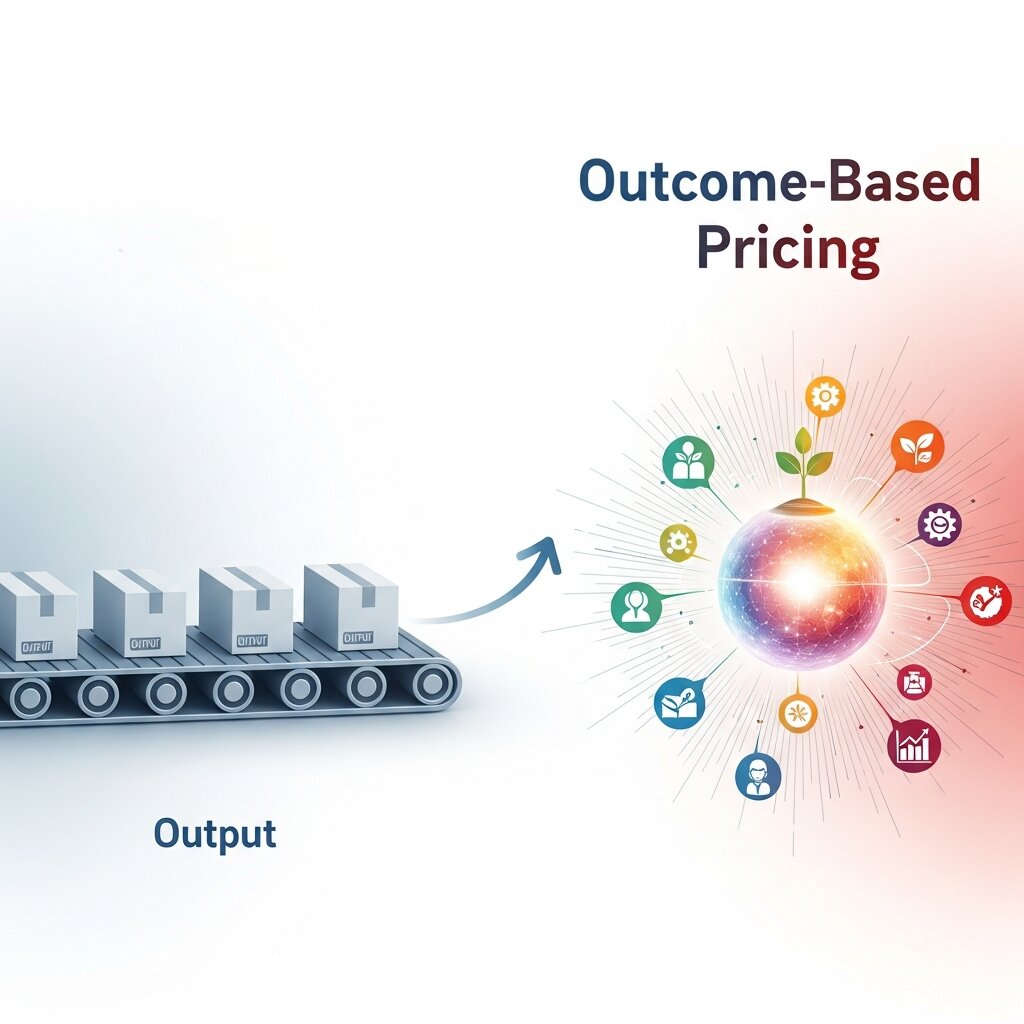 Trading time for money is a reliable way to start a business, but it is a terrible way to scale one. Hourly billing penalizes efficiency. If your team gets faster and better at designing products, you end up billing fewer hours and making less money. To scale effectively, you need to detach your revenue from your time.
Adopt Value-Based Pricing Models
Value-based pricing shifts the focus from how long a project takes to the impact it has on the client’s business. If your design work will help a client increase their conversion rate by 20%, generating millions in new revenue, your pricing should reflect that value.
Transitioning to this model requires deep conversations during the sales process. You must understand the client’s business goals, current bottlenecks, and financial metrics. Once you uncover the true value of the engagement, you can price your services accordingly. This approach allows a digital product design studio to secure higher margins while delivering tangible business outcomes.
Offer Productized Services
Another highly scalable pricing model is productized services. This involves packaging your design expertise into a standardized offering with a fixed scope, price, and timeline. Examples include a one-week UX audit, a branding sprint, or a fixed-price prototyping workshop.
Productized services are easier to sell because the client knows exactly what they are getting and how much it will cost. They are also highly efficient in delivering because your team follows the exact same process every time. These packaged offerings serve as excellent entry-point offers, building trust with new clients before upselling them into larger engagements.
Build a Specialized, Scalable Team
You cannot scale a digital product design studio if every project relies on a few key individuals. A scalable business requires a resilient team structure that can handle fluctuating workloads without compromising quality.
Hire for Adaptability and Process Alignment
When recruiting new talent, look beyond their Dribbble portfolio. A beautiful aesthetic sense is important, but adaptability and process alignment are critical for a growing agency. You need designers who can thrive within your established workflows, communicate effectively with clients, and collaborate with developers.
Implement a rigorous onboarding process for new hires. They should spend their first few weeks learning your agency’s methodologies, communication standards, and project management tools. A well-trained team member can integrate into live projects much faster, accelerating your firm’s overall output.
Leverage Freelance Networks for Elasticity
Maintaining a massive full-time staff can severely hurt your profit margins during slow months. To maintain flexibility, build a trusted network of specialized freelancers and contractors.
This “elastic” workforce allows you to scale up resources quickly when you land a massive enterprise project, and scale down safely when the project wraps up. Treat your freelancers like extensions of your internal team. Train them on your processes and include them in team communications to ensure they deliver work that meets your studio’s standards.
Invest in Client Onboarding and Education
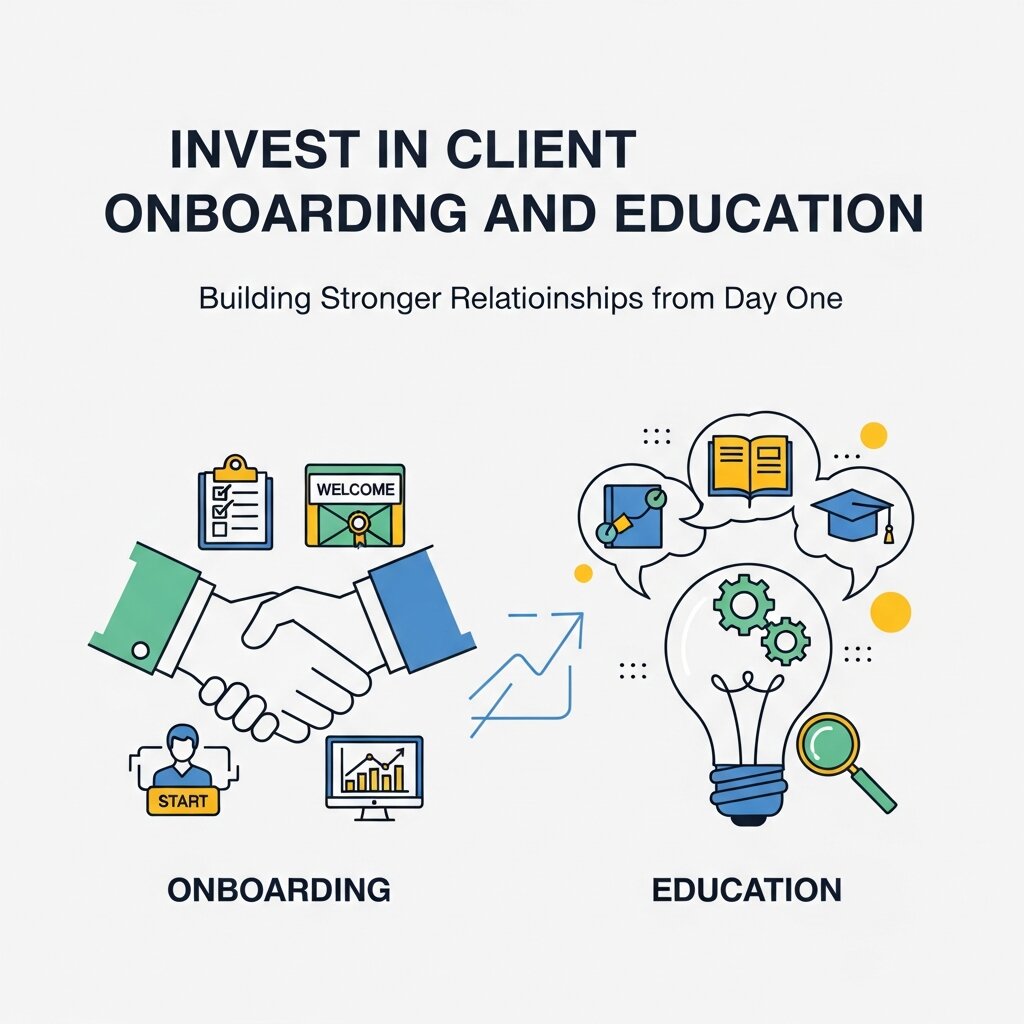 Client management often consumes more time than the actual design work. Misaligned expectations, constant revision requests, and scope creep can destroy a project’s profitability. A structured client onboarding process prevents these issues before they start.
Set Clear Expectations Early
The first week of an engagement sets the tone for the entire relationship. Use an official onboarding kickoff meeting to establish boundaries and communication protocols. Explain exactly how the feedback process works, expected turnaround times, and what constitutes a change in scope.
Educating clients on the digital product design process reduces friction. Many clients do not understand the difference between wireframes, high-fidelity mockups, and clickable prototypes. Taking the time to explain these stages upfront ensures they provide the right kind of feedback at the right time.
Automate the Administrative Heavy Lifting
Remove the manual labor from client management. Use CRM tools and automation software to handle contract signing, invoice generation, and initial questionnaire distribution. Sending an automated welcome sequence to new clients makes your studio look highly professional while saving your account managers hours of tedious work.
Develop Intellectual Property (IP)
Most design studios are pure service businesses. They generate revenue solely through client work. Developing your own intellectual property creates a new asset class for your business, driving passive revenue and increasing your studio’s overall valuation.
Internal Tools and Frameworks
Look closely at the repetitive tasks your team performs daily. Can any of these be codified into a proprietary tool or framework? For instance, you might develop a unique user research methodology, a specialized Figma plugin, or a custom code library for animations.
These internal tools make your team significantly faster and differentiate your studio from competitors. You can market these proprietary frameworks as part of your unique value proposition, showing clients exactly how you deliver superior results.
Transitioning from Service to Product
Some of the most successful tech companies started as digital product design studios. Creating your own digital products—whether it is a UI kit, a SaaS tool, or an educational course—allows you to generate revenue independent of client services.
Selling digital products provides a financial cushion during slow service months. It also acts as a powerful marketing tool. A popular UI kit can attract thousands of potential clients to your website, establishing your studio as an industry authority.
Cultivate a Predictable Lead Generation Engine
Relying exclusively on word-of-mouth referrals is dangerous. Referrals are fantastic, but they are entirely unpredictable. To scale, you must take control of your pipeline through proactive lead generation and marketing.
Content Marketing for Authority
Publishing high-quality content demonstrates your expertise and attracts inbound leads. Focus on creating case studies that detail the business problems you solved, not just the beautiful interfaces you designed. Explain your strategic approach, the challenges you overcame, and the measurable results you achieved.
Share insights on digital product design through comprehensive blog posts, newsletters, and social media. When you consistently publish valuable information, you build trust with potential clients long before they ever schedule a discovery call.
Strategic Partnerships
Identify non-competing businesses that serve your exact target audience. Development agencies, SEO firms, and marketing consultancies often have clients who desperately need high-level design work.
Establish formal referral partnerships with these companies. By passing leads back and forth, you create a steady stream of highly qualified prospects with very little marketing spend.
Frequently Asked Questions (FAQ)
What is the biggest challenge in scaling a digital product design studio?
The biggest challenge is moving away from a founder-dependent model to a system-driven operation. Many studios struggle because processes are not standardized, and too much work depends on a few key individuals. Without structured workflows, every project feels unique, which slows down delivery and limits growth.
How can a design studio increase revenue without increasing workload?
To increase revenue without adding more workload, studios must shift from time-based billing to value-based or productized pricing models. Instead of charging hourly, you charge based on the impact your work creates for clients. Additionally, packaging services into fixed offerings improves efficiency and predictability.
Why is standardization important in design agency operations?
Standardization ensures that every project follows a consistent workflow, reducing confusion and inefficiency. It allows teams to reuse proven systems instead of starting from scratch each time. This improves delivery speed, reduces errors, and enhances collaboration between designers and developers.
What is value-based pricing in a design studio?
Value-based pricing is a model where services are priced based on the business impact they create rather than the hours required to complete the work. For example, if a design project significantly increases a client’s conversion rate or revenue, the pricing reflects that value.
How does a design system help improve scalability?
A design system is a collection of reusable UI components, styles, and guidelines that standardize the design process. It allows teams to build interfaces faster without redesigning elements from scratch. This improves consistency across projects and reduces production time significantly.
Why should agencies develop intellectual property (IP)?
Developing intellectual property allows a design studio to create assets beyond client work, such as tools, frameworks, or digital products. This adds new revenue streams and reduces dependency on service-based income. IP also strengthens brand authority, as proprietary systems or tools demonstrate expertise and innovation.
How can agencies generate consistent leads?
Consistent lead generation requires building a predictable marketing engine instead of relying only on referrals. This can be achieved through content marketing, case studies, SEO, and strategic partnerships. Publishing valuable insights helps attract inbound leads, while partnerships with agencies in related fields create a steady flow of referrals.
What role do freelancers play in scaling a design agency?
Freelancers provide flexibility and scalability without the overhead of a large full-time team. They allow agencies to quickly expand capacity during high-demand periods and reduce costs during slower times.
Sustaining Momentum as Your Agency Evolves
Scaling a service business is never a linear journey. As you implement these strategies, new bottlenecks will inevitably appear. The processes that helped you grow to your first million in revenue will likely break down as you approach the five-million mark.
Success requires continuous refinement. Regularly audit your operations, listen closely to your team’s feedback, and remain willing to discard outdated systems. By focusing on process standardization, value-based pricing, and predictable lead generation, your digital product design studio can achieve sustainable, profitable growth for years to come.


