
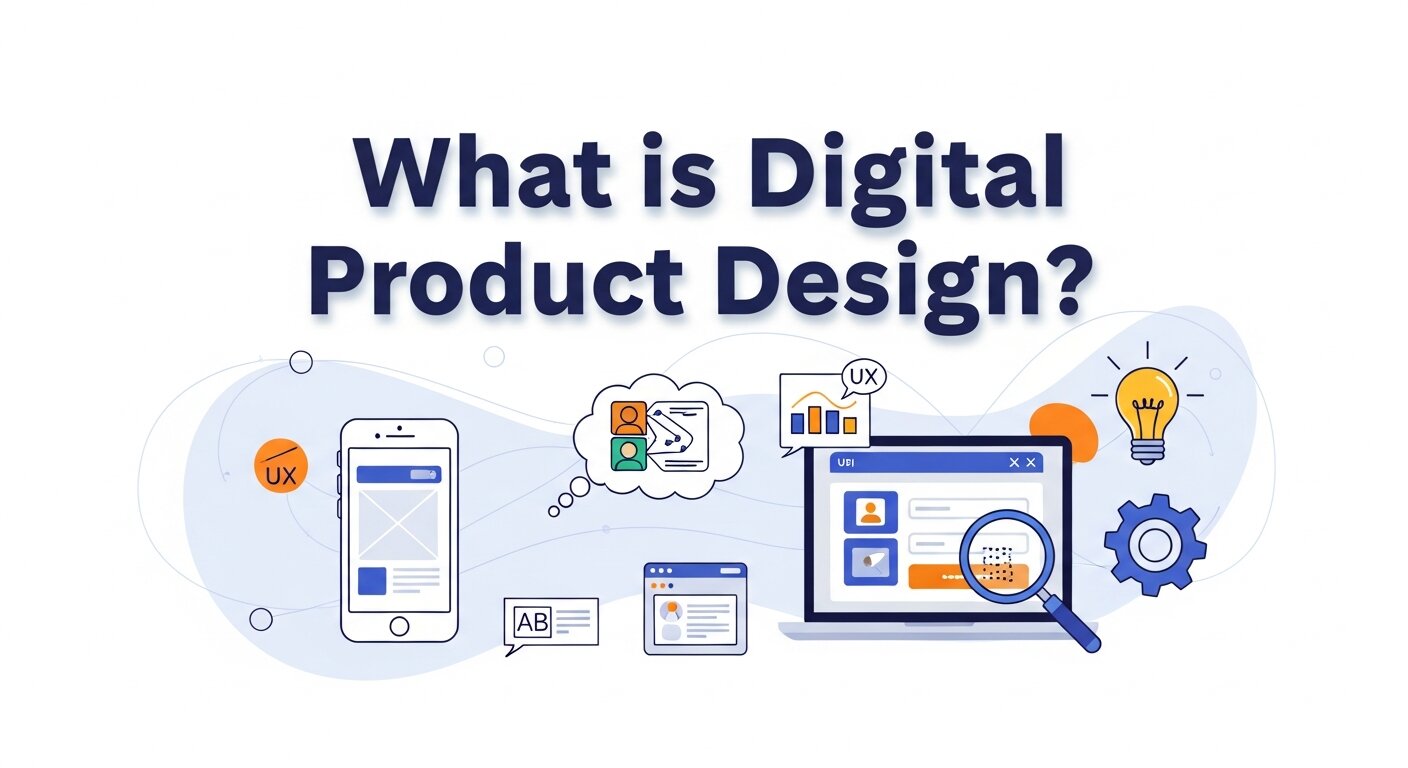
Every app on your phone, every software tool you use at work, and every website you browse started as an idea. Transforming that raw idea into a functional, enjoyable experience requires a specific discipline. That discipline is digital product design.
Digital product design is the comprehensive process of creating software applications and digital interfaces that solve real user problems. It combines psychology, visual aesthetics, and technology to build tools that people actually want to use. When you open a banking app and intuitively know how to transfer money, you are experiencing the results of effective digital product design.
Reading this guide will give you a clear understanding of what digital product design entails. We will explore the core components that make up the field, walk through the standard design process, and identify the key professionals who bring these digital experiences to life. By the end, you will know exactly how digital product design drives business success and user satisfaction.
The Core Elements of Digital Product Design
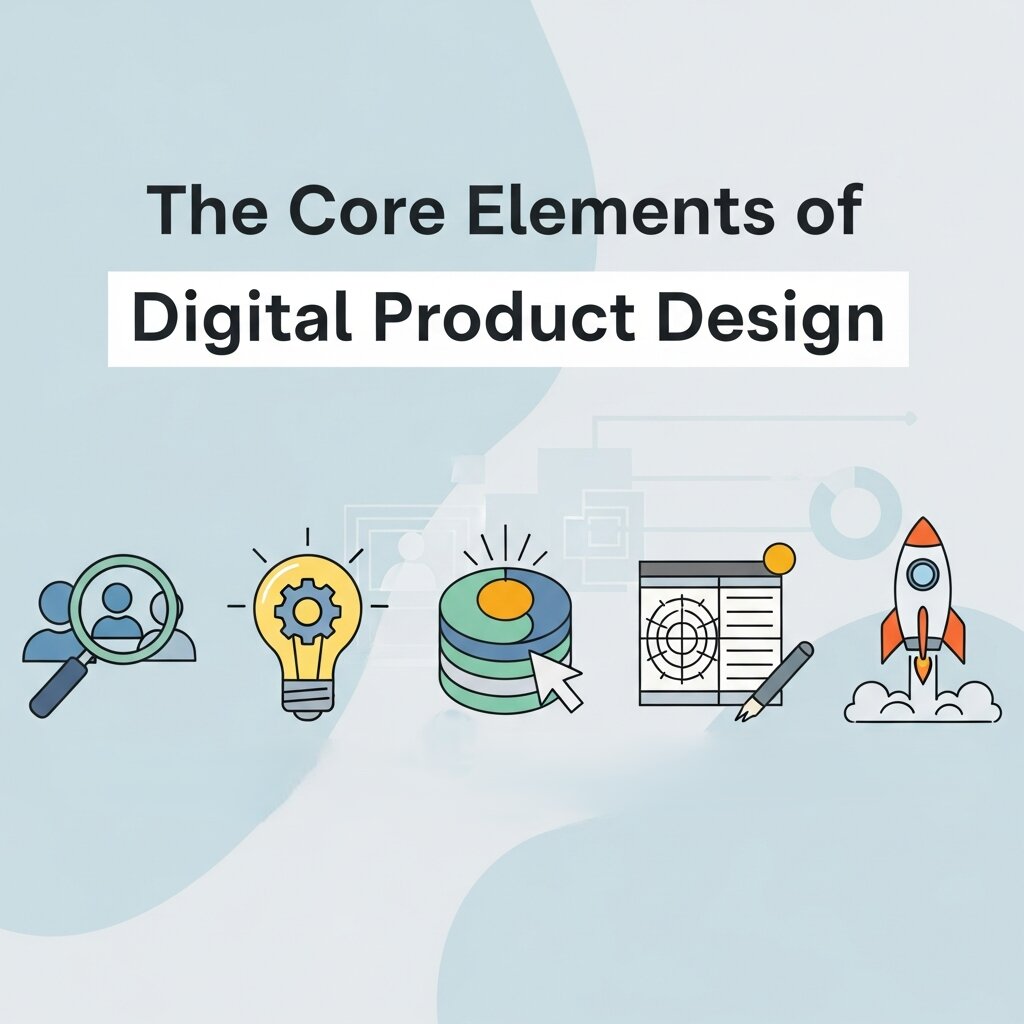 Building a successful digital product requires multiple overlapping disciplines. Designers must balance how a product looks, how it works, and how it aligns with business goals.
User Experience (UX) Design
User experience is the foundation of digital product design. UX designers focus on the logic and flow of the product. They ask questions about how the user will navigate from point A to point B. The goal is to remove friction. If a user wants to buy a pair of shoes, the UX designer ensures the checkout process requires as few clicks as possible. They rely heavily on user research, wireframing, and journey mapping to plot out the optimal path.
User Interface (UI) Design
While UX focuses on the flow, user interface design deals with the visual surface. UI designers select the colors, typography, and button shapes. They create the visual hierarchy that guides the user’s eye to the most important information on the screen. A strong UI makes the product visually appealing and reinforces the brand’s identity.
Information Architecture
Information architecture involves organizing content logically. Think of it as the blueprint of a digital house. If a website has hundreds of pages, the information architecture determines how those pages are categorized in the navigation menu. Good architecture prevents users from getting lost. It ensures that the information a user needs is exactly where they expect to find it.
Interaction Design
Interaction design looks at the micro-moments of a digital product. It covers the animations, transitions, and feedback loops that occur when a user takes an action. When you swipe a notification, and it smoothly slides off the screen, that is interaction design at work. These small details provide visual feedback, confirming to the user that the system has registered their input.
The Digital Product Design Process
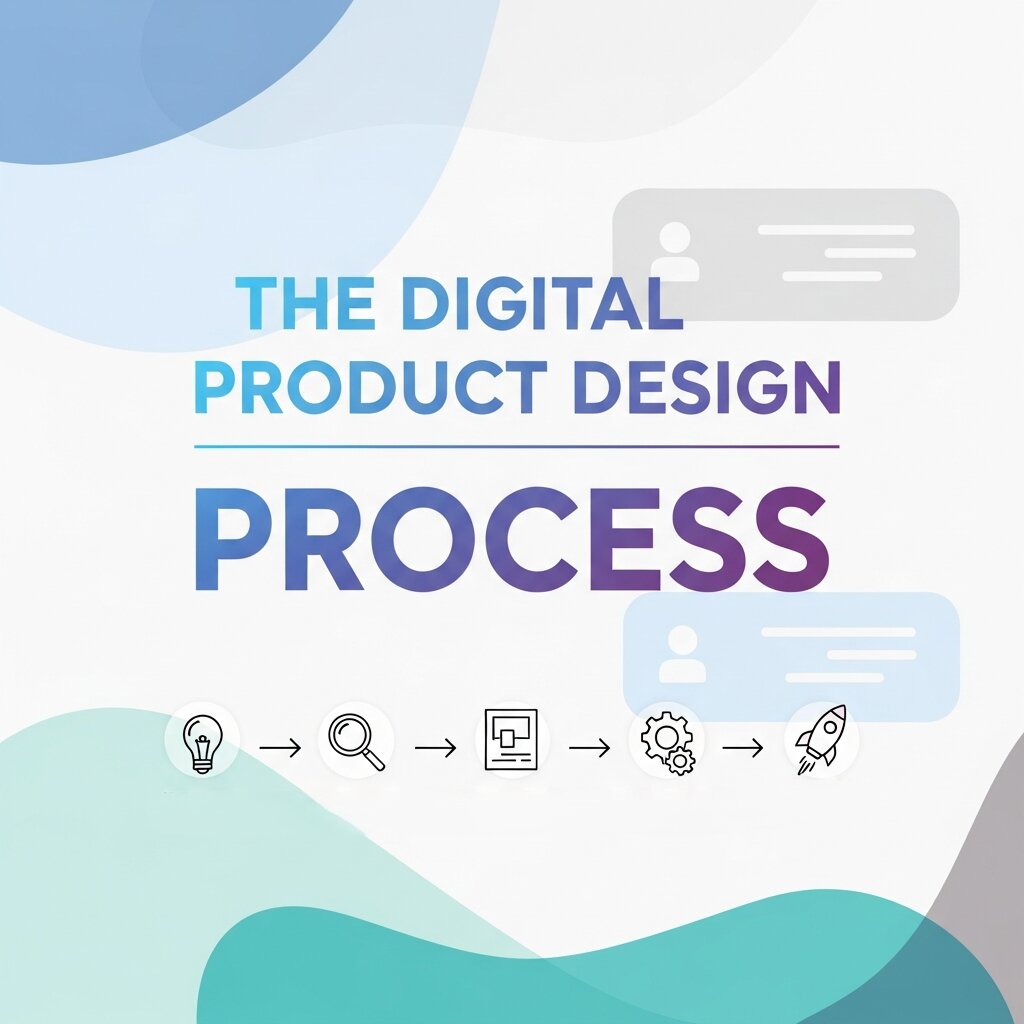 Digital product design is rarely a linear path. It relies on continuous loops of feedback and refinement. Most teams follow a variation of the design thinking framework to ensure they are building the right solution.
Empathize and Research
Before drawing a single screen, designers must understand the people they are designing for. This phase involves conducting user interviews, sending out surveys, and analyzing competitor products. The objective is to gather data about user pain points, motivations, and behaviors. Skipping this step often results in products that nobody wants to use.
Define the Problem
After gathering research, the team analyzes the data to identify the core problems. They create user personas to represent their target audience. They also draft problem statements to guide their work. A clear problem statement acts as a north star for the rest of the project. It ensures the entire team remains focused on solving a specific issue rather than getting distracted by unnecessary features.
Ideate Solutions
With a clear problem defined, the team begins brainstorming. The ideation phase is about generating as many ideas as possible. Designers sketch rough concepts on paper or whiteboards. They explore different ways to approach the problem without worrying about perfection. Once a wide range of ideas is on the table, the team evaluates them and selects the most promising concepts to move forward.
Prototyping
Prototyping brings the ideas to life. Designers build interactive models of the product using tools like Figma or Sketch. These prototypes can range from low-fidelity wireframes (basic structural outlines) to high-fidelity mockups that look and act like the final software. Prototypes allow the team to click through the screens and experience the flow before writing any actual code.
Testing and Iteration
The prototype is put in front of real users. Designers observe how people interact with the interface. They take note of where users hesitate, get confused, or fail to complete a task. This feedback is invaluable. The team uses these insights to make adjustments, fixing the flaws in the design. This cycle of testing and tweaking continues until the product provides a seamless experience.
Key Roles in a Product Design Team
Creating a complex application requires a team of specialized professionals. While smaller companies might hire generalists, larger organizations break digital product design down into specific roles.
The Product Designer
A product designer oversees the entire user journey. They maintain a bird’s-eye view of the project, ensuring that the design choices align with both user needs and business objectives. They often possess a mix of UX and UI skills. Their primary responsibility is to ensure the final product delivers genuine value to the market.
The UX Researcher
UX researchers are the scientists of the design team. They dedicate their time to studying user behavior. They recruit participants, conduct usability tests, and analyze the resulting data. Their findings inform the decisions made by the rest of the team. By relying on hard data rather than assumptions, UX researchers minimize the risk of launching a failed product.
The UI Designer
UI designers are the visual artists. They take the wireframes created by the UX team and apply the final visual layer. They create component libraries and design systems to ensure consistency across every screen. Their work directly impacts the perceived quality and trustworthiness of the digital product.
The Product Manager
While not strictly a designer, the product manager plays a vital role in digital product design. They act as the bridge between the design team, the engineering team, and the business stakeholders. The product manager defines the project scope, prioritizes features, and ensures the product is delivered on time.
Why Digital Product Design Matters for Business Growth
Investing in digital product design is a strategic business decision. Companies that prioritize design consistently outperform their competitors.
Boosting Customer Retention
Users have very little patience for clunky software. If an app is difficult to use, they will simply delete it and find an alternative. Good digital product design eliminates frustration. When users can easily achieve their goals, they are much more likely to return. High retention rates directly translate to stable, predictable revenue.
Lowering Development Costs
Writing code is expensive. Fixing bad code is even more expensive. By utilizing digital product design, companies identify flaws during the prototyping phase. It is incredibly cheap to change a button on a design file. It is very costly to have engineers rewrite the underlying code after the product has launched. Design testing saves companies from making expensive engineering mistakes.
Building Brand Loyalty
Every interaction a customer has with your digital product shapes their opinion of your brand. A smooth, aesthetically pleasing interface builds trust. It signals to the user that your company is professional and cares about quality. Over time, these positive interactions turn casual users into loyal brand advocates.
Common Challenges in Digital Product Design
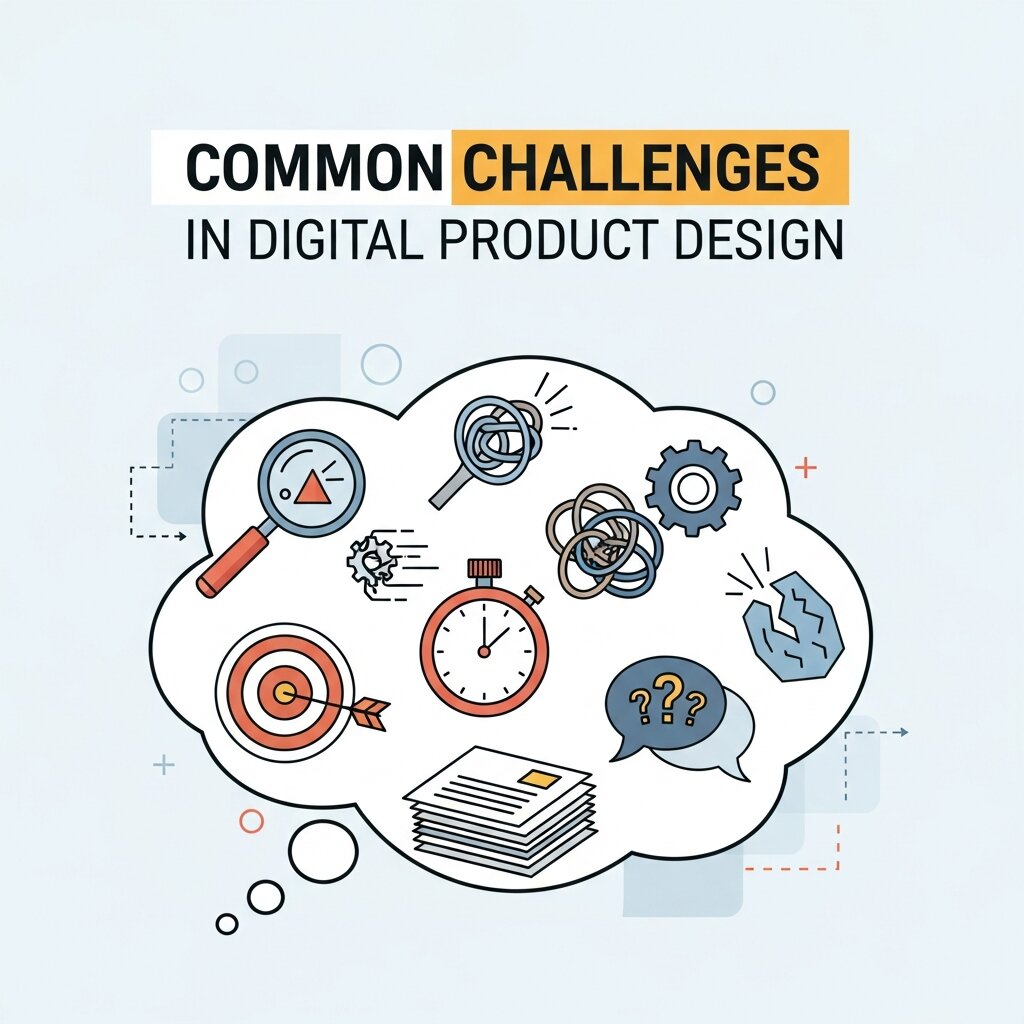 Despite its importance, the design process comes with several hurdles that teams must navigate.
Balancing User Needs with Business Goals
Users want a completely free app with no advertisements. The business needs to generate revenue to survive. Designers constantly face the challenge of finding the middle ground. They must create experiences that delight the user while still driving conversions, subscriptions, or ad views.
Avoiding Feature Creep
As a project progresses, stakeholders often request new features. This phenomenon, known as feature creep, can bloat the software and ruin the user experience. A cluttered interface overwhelms the user. Design teams must advocate for simplicity, fighting to keep the product focused on its core functionality.
Designing for Accessibility
Digital products must be usable by everyone, including people with visual, auditory, or motor impairments. Ensuring high color contrast, providing text alternatives for images, and enabling keyboard navigation are critical steps. Designing for accessibility requires extra time and testing, but it is essential for creating an inclusive product.
Frequently Asked Questions About Digital Product Design
Frequently Asked Questions (FAQ)
1. What is digital product design?
Digital product design is the process of creating user-focused software applications, websites, or digital tools. It combines user experience (UX), user interface (UI), and research to build products that solve real problems. The goal is to make digital products easy to use, visually appealing, and aligned with business objectives.
2. Why is digital product design important?
Digital product design is crucial because it directly impacts how users interact with your product. A well-designed product improves usability, increases customer satisfaction, and boosts retention rates. It also helps businesses stand out in competitive markets. Poor design, on the other hand, can frustrate users and lead to lost opportunities.
3. What is the difference between UX and UI design?
UX (User Experience) design focuses on the overall structure and functionality of a product. It ensures users can complete tasks efficiently. UI (User Interface) design, on the other hand, deals with the visual elements such as colors, typography, and layout.
4. What are the key stages of the digital product design process?
The design process typically includes research, problem definition, ideation, prototyping, and testing. First, designers study user behavior and identify pain points. Then they define the problem clearly and brainstorm solutions. Prototypes are created to visualize ideas, followed by testing with real users.
5. Do I need a large team for digital product design?
Not necessarily. Small businesses or startups can start with a small team or even a single product designer who handles multiple roles. However, as the product grows, having specialized roles like UX researchers, UI designers, and product managers becomes beneficial. The size of the team depends on the complexity of the product and business goals.
6. Which tools are commonly used in digital product design?
Popular tools include Figma, Sketch, and Adobe XD for design and prototyping. Tools like Miro are used for brainstorming, while Notion helps with documentation. For user testing, platforms like UserTesting are commonly used. These tools allow designers to collaborate, create interactive prototypes, and gather feedback efficiently, making the design process faster and more effective.
7. How long does it take to design a digital product?
The timeline varies depending on the complexity of the project. A simple product may take a few weeks, while more complex applications can take several months. Factors such as research depth, number of features, and testing cycles all influence the timeline. A well-planned design process may take time initially, but it saves significant effort and cost during development and after launch.
8. Can digital product design improve business performance?
Yes, effective design can significantly improve business performance. It enhances user satisfaction, increases engagement, and boosts conversion rates. A well-designed product reduces user frustration and builds trust, leading to higher retention and customer loyalty.
Ready to Start Your Design Journey?
Digital product design is a dynamic, highly rewarding field. It requires empathy, analytical thinking, and a sharp eye for visual details. By understanding the core elements, respecting the research process, and collaborating with cross-functional teams, you can build digital experiences that truly resonate with users.
If you want to improve your own products, start by talking to your customers. Ask them where they struggle. Look at the data. The best design decisions always come from a deep understanding of the people using the software. Begin implementing small, user-tested changes today, and watch your product metrics improve.


