
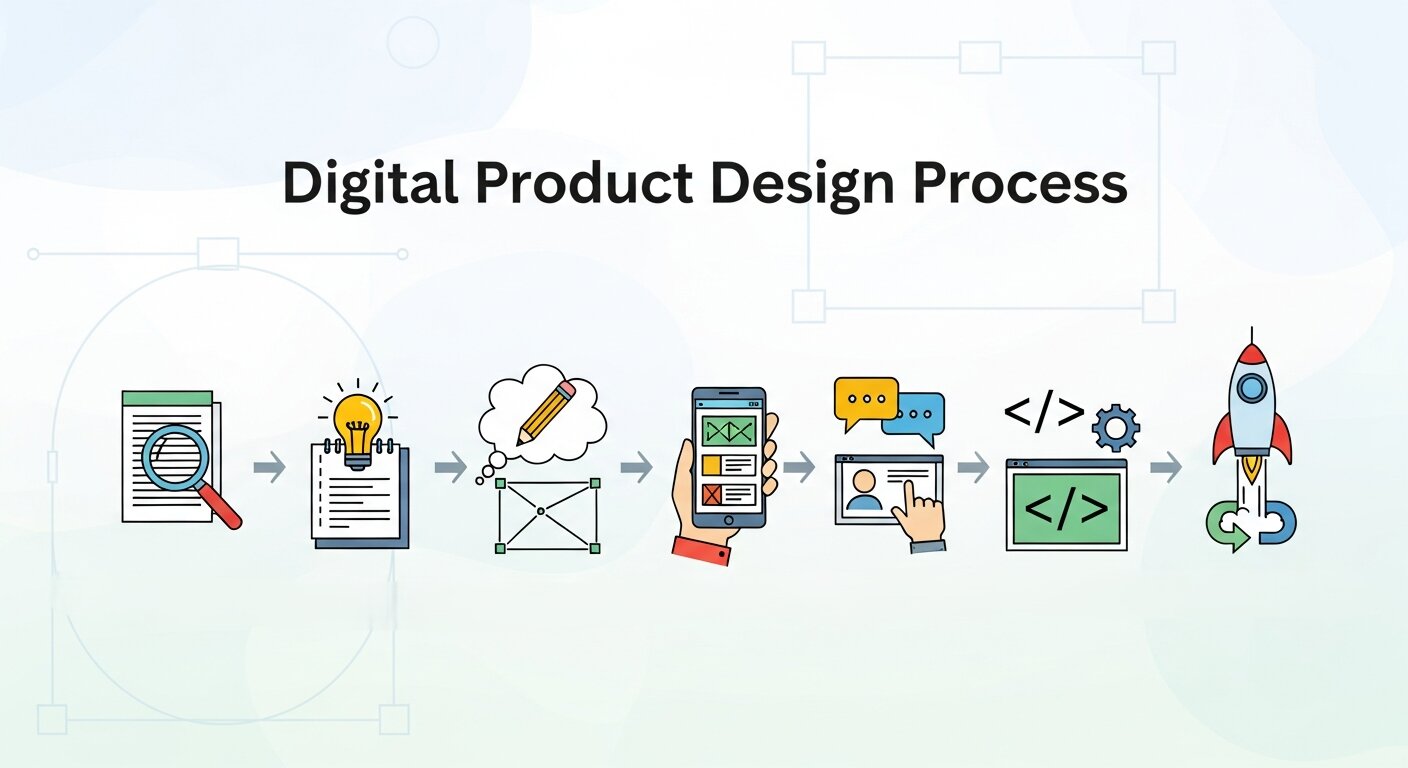
Creating a successful app or website requires far more than picking the right colors and fonts. Users expect seamless, intuitive experiences every time they interact with a screen. When an interface is confusing or a workflow is clunky, users quickly abandon the application for a competitor. This reality puts immense pressure on teams to get things right from the very beginning.
To build software that truly resonates with users, teams must rely on a structured digital product design process. This systematic approach ensures that every decision aligns with real user needs and overarching business goals. It removes the guesswork from development and replaces it with data, testing, and continuous refinement.
Understanding this workflow is essential for founders, developers, and designers alike. By breaking down the journey from a raw idea to a polished interface, teams can avoid costly rework and build solutions that people actually want to use.
This guide will walk you through the essential phases of digital product design. You will learn how to structure your workflow, test your assumptions, and ultimately create an exceptional user experience that drives long-term success.
Understanding Digital Product Design
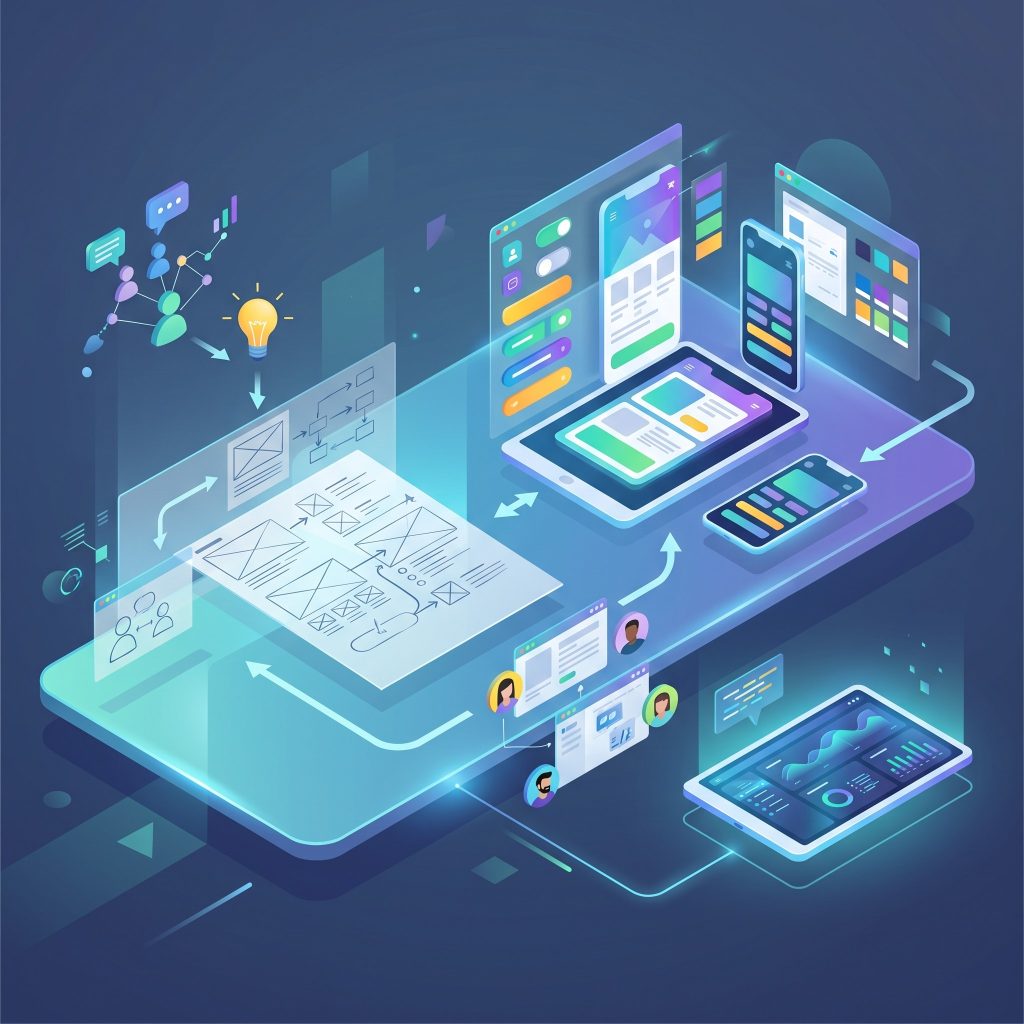 Digital product design is the comprehensive process of identifying a market opportunity, defining the problem, developing a proper solution, and validating that solution with real users. It encompasses user experience (UX) design, user interface (UI) design, and business strategy.
Unlike traditional graphic design, which often focuses heavily on aesthetics, this discipline is deeply rooted in functionality and user behavior. The goal is to solve specific problems for a target audience while achieving key business metrics, such as increased retention or higher conversion rates.
A well-executed digital product design process acts as a roadmap. It guides teams through the messy, ambiguous early stages of a project and provides clear milestones for success. When everyone understands the process, collaboration improves, and the final product is far more likely to succeed in a competitive market.
Research and Discovery
Every great product begins with a deep understanding of the user. Skipping the research phase is the most common reason new digital products fail. You cannot solve a problem if you do not understand the people experiencing it.
During this initial stage, teams gather qualitative and quantitative data. Qualitative data might include user interviews, focus groups, and open-ended surveys. These methods reveal the frustrations, desires, and daily habits of your target audience. Quantitative data, such as market reports and analytics from existing platforms, provides a broader view of market trends and user behavior.
Competitor analysis is another crucial component of discovery. By evaluating similar products, you can identify industry standards, uncover areas where competitors fall short, and find opportunities to differentiate your offering. All of this research culminates in the creation of user personas and empathy maps, which serve as reference points for the rest of the project.
Ideation and Strategy
Once you have a clear understanding of the user and the market, it is time to brainstorm solutions. The ideation phase is all about generating a wide range of ideas without immediate judgment.
Cross-functional collaboration is highly beneficial here. Bringing together designers, developers, and product managers ensures that ideas are evaluated from multiple perspectives. Techniques like mind mapping, sketching, and “Crazy Eights” help teams think outside the box and explore various approaches to the core problem.
After generating ideas, the team must narrow them down based on feasibility and impact. This leads to the creation of a product strategy and a feature roadmap. The goal is to define the Minimum Viable Product (MVP)—the simplest version of the product that still delivers core value to the user. Defining the MVP helps prevent feature creep and keeps the project focused on what truly matters.
Information Architecture and Wireframing
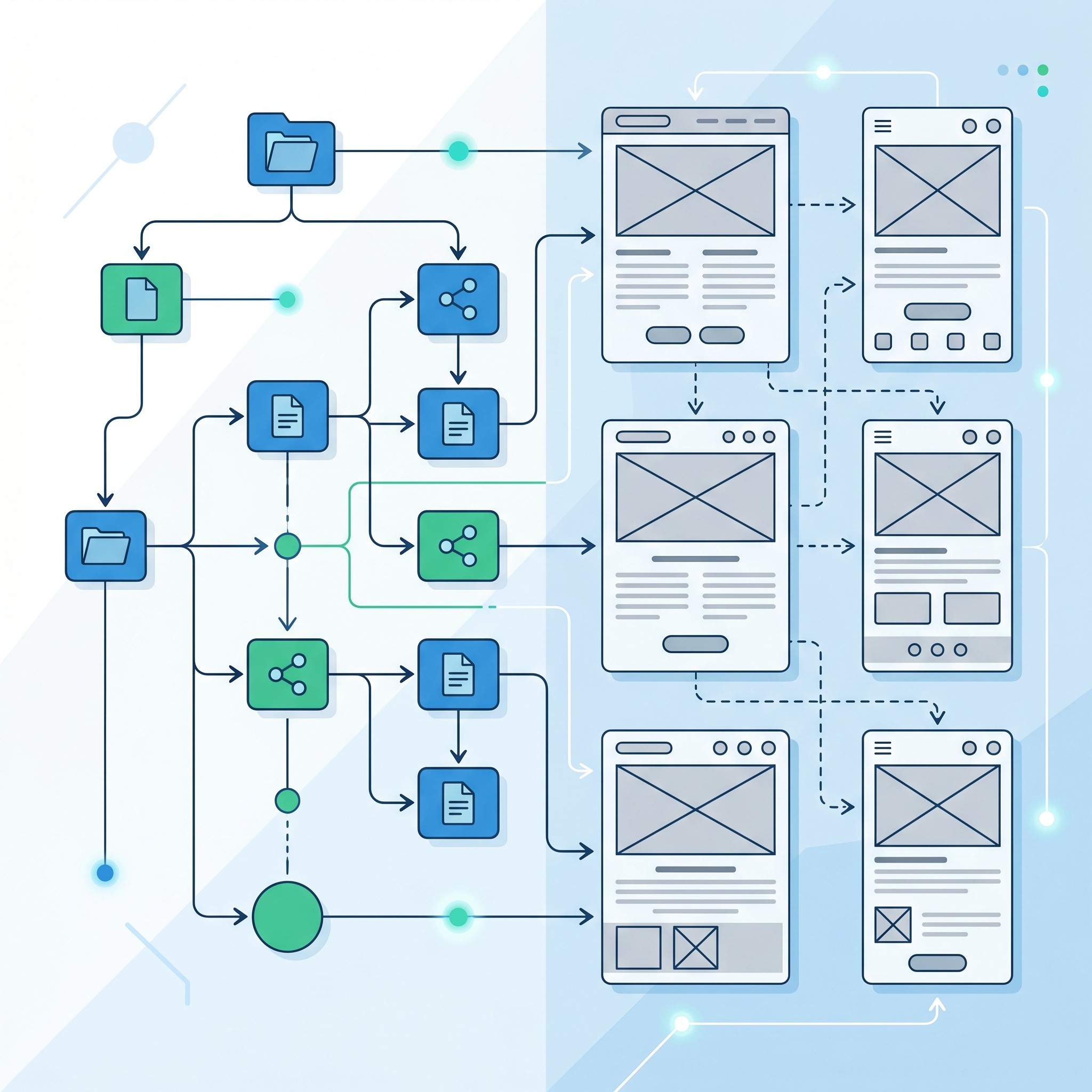 With a clear strategy in place, the team begins to outline the product’s structure. Information architecture (IA) involves organizing the content and features in a logical, intuitive manner. A well-planned IA ensures that users can easily find what they are looking for without feeling overwhelmed.
Next comes wireframing. Wireframes are low-fidelity, basic visual representations of the product’s screens. They strip away colors, images, and typography to focus entirely on layout and functionality.
Creating wireframes allows teams to quickly map out the user journey and test different structural layouts. Because wireframes are quick to produce, it is easy to discard ideas that do not work and pivot to better solutions. This structural blueprint forms the foundation for the final visual design.
Prototyping and User Testing
A wireframe shows how a product will look structurally, but a prototype shows how it will work. Prototyping involves linking wireframes or higher-fidelity designs together to create a clickable, interactive model of the product.
Interactive prototypes are essential for the next step: user testing. You must put the prototype in the hands of real users to see how they navigate the interface. During user testing sessions, observe where users get stuck, what they misunderstand, and what they enjoy.
This phase is highly iterative. You will likely discover flaws in your logic or areas where the user flow is confusing. Based on this feedback, you refine the prototype and test again. Validating the product at this stage is vastly cheaper and faster than making changes after the development team has already written the code.
High-Fidelity UI Design
Once the prototype has been thoroughly tested and validated, the visual design phase begins. High-fidelity UI design brings the product to life through color, typography, imagery, and micro-interactions.
The UI must align with the brand’s identity while enhancing the overall usability. Good UI design guides the user’s eye to important actions, establishes a clear visual hierarchy, and makes the interface feel responsive and modern. Teams often develop a comprehensive design system during this phase. A design system is a collection of reusable components and guidelines that ensures visual consistency across the entire application.
This phase also requires close collaboration with developers. Designers must provide properly formatted assets and detailed documentation to ensure the final coded product matches the approved designs perfectly.
The Value of a Digital Product Design Studio
 Executing this workflow internally can be challenging, especially for growing companies with limited design resources. Building an in-house team requires significant time, budget, and management overhead.
Many organizations choose to partner with a specialized digital product design studio. These agencies bring a wealth of experience, having solved complex design challenges across various industries. A dedicated studio can execute the digital product design process rapidly and objectively, free from internal corporate biases.
Working with external experts often accelerates the timeline from concept to launch. They supply the necessary research, strategy, and design execution, allowing your internal team to focus on core business operations and technical development.
Building a Culture of Continuous Iteration
The launch of a digital product is not the end of the design process; it is just the beginning of the next phase. Once a product is live, users will interact with it in unpredictable ways.
Teams must continuously monitor analytics, gather user feedback, and track key performance indicators (KPIs). Heatmaps, session recordings, and direct user surveys provide ongoing insights into how the product is performing in the real world.
By treating digital product design as an ongoing cycle of measurement and iteration, you ensure the product evolves alongside user expectations. Regular updates, feature enhancements, and usability improvements keep the application relevant and competitive over the long term.
Visual Branding and Design System Creation
After completing the UI design, the next important step is building a consistent visual language for the entire product. This phase focuses on defining how the product looks and feels across every screen and interaction. Designers establish key brand elements such as color palettes, typography styles, iconography, spacing rules, and UI components. All of these elements are organized into a design system that acts as a single source of truth for both designers and developers. A strong design system ensures consistency, reduces repetitive work, and speeds up future development. It also helps maintain a unified user experience even as the product scales. When done properly, visual branding strengthens recognition, builds trust, and makes the digital product feel more professional, polished, and reliable in the eyes of users.
Development Handoff and Implementation
Once the design phase is finalized, the project moves into development. This stage involves transferring all design assets, specifications, and documentation to the development team. Designers must clearly communicate how each element should behave, including spacing, interactions, animations, and responsiveness across devices. Tools like design handoff platforms help streamline this process and reduce misunderstandings. Close collaboration between designers and developers is essential to ensure that the final product matches the intended vision. Regular communication, design reviews, and feedback loops help maintain accuracy during implementation. Any inconsistencies or technical challenges are addressed early to avoid delays. A smooth handoff process ensures that the transition from design to code is efficient, reducing rework and preserving the quality of the user experience.
Launch Preparation and Quality Assurance
Before launching the product, thorough testing and final checks are essential to ensure everything works as expected. This phase includes quality assurance (QA), where teams test functionality, responsiveness, performance, and usability across different devices and browsers. Bugs, broken flows, or visual inconsistencies are identified and fixed before release. At the same time, teams prepare for launch by setting up analytics tools, tracking systems, and performance monitoring dashboards. Marketing assets and release plans are also finalized during this stage to ensure a smooth rollout. A well-prepared launch reduces risk and ensures users experience a stable, polished product from day one. Careful attention in this phase helps build strong first impressions, which are critical for user adoption and long-term success.
Post-Launch Optimization and Growth
After the product is launched, the focus shifts to continuous improvement and growth. Teams analyze real user behavior using analytics tools, heatmaps, and feedback channels to understand how people interact with the product. This data reveals what is working well and what needs improvement. Based on these insights, designers and developers make iterative updates to enhance usability, fix friction points, and introduce new features. A/B testing is often used to compare different design or feature variations to determine what performs better. This ongoing optimization process ensures that the product evolves with user needs and market trends. Instead of being a one-time project, the digital product becomes a living system that continuously improves, grows, and delivers more value over time.
FAQ: Digital Product Design Process
1. What is a digital product design process?
It is a structured workflow used to create apps and websites by combining research, strategy, design, prototyping, and testing. The main goal is to build digital products that solve real user problems while supporting business objectives.
2. Why is the digital product design process important?
It helps teams avoid random decision-making and reduces the risk of building something users don’t need. With a clear process, products become more user-friendly, efficient, and aligned with business goals.
3. What are the main phases of digital product design?
The process usually starts with research and discovery, followed by ideation and strategy. After that comes structuring the product through information architecture and wireframing, then prototyping and user testing. Once validated, the final UI design is created, and after launch, continuous improvement continues.
4. What is the difference between UX and UI in product design?
UX focuses on the overall experience, making sure the product is easy and enjoyable to use. UI focuses on the visual side, including layout, colors, typography, and interactive elements. Both work together to create a complete product experience.
5. What is a wireframe in digital product design?
A wireframe is a basic visual outline of a screen that shows structure and layout without detailed design elements. It helps teams plan how the product will function before adding visual styling.
6. Why is user testing important in the design process?
User testing shows how real people interact with a product before it is fully built. It helps identify confusion, usability issues, and design flaws early, which saves time and development costs later.
7. What is a Minimum Viable Product (MVP)?
An MVP is the simplest version of a product that includes only essential features needed to solve the core user problem. It is used to validate ideas quickly before investing in full development.
Elevate Your Next Software Project
Great software is the result of intention, research, and rigorous testing. By committing to a structured digital product design process, you drastically increase your chances of building something users truly value. From initial discovery to final UI polish, every step serves to align your business goals with the reality of human behavior.
Review your current workflows. Are you spending enough time talking to your users? Are you testing prototypes before writing code? By refining your approach to design, you can eliminate friction, boost user satisfaction, and create digital experiences that drive lasting success.


