
The intersection of artificial intelligence and creative workflows is undergoing a massive transformation. Designers and developers are moving past the novelty of text-to-image generators and prompt-based interfaces. Instead, they are integrating intelligent systems directly into the core of how they build digital experiences. By the time we reach 2026, artificial intelligence will no longer be an optional add-on or a trendy feature. It will be the foundational layer upon which digital interfaces are conceptualized, tested, and deployed.
Understanding the upcoming AI in digital product design trends 2026 is critical for teams looking to stay competitive. The tools and methodologies we use are shifting from passive instruments to active collaborators. This evolution fundamentally changes how product teams approach problem-solving, user research, and interface creation. Rather than spending countless hours on repetitive pixel-pushing, designers will focus on orchestrating complex systems and guiding machine learning models to achieve specific user outcomes.
For organizations, this shift promises unprecedented speed and precision. The traditional digital product design process often involves lengthy feedback loops, siloed departments, and significant bottlenecks between the initial wireframe and the final code. Artificial intelligence is breaking down these barriers, creating a more fluid and continuous pipeline. Teams that adopt these emerging frameworks will be able to iterate faster, understand their users on a deeper level, and launch more resilient products.
This article explores the specific trends that will define the digital product design landscape in 2026. You will learn how intelligent systems are reshaping user experience strategies, how they impact the collaboration between design and engineering, and what steps your organization can take to prepare for this new era of digital creation.
The Evolution of the Digital Product Design Process
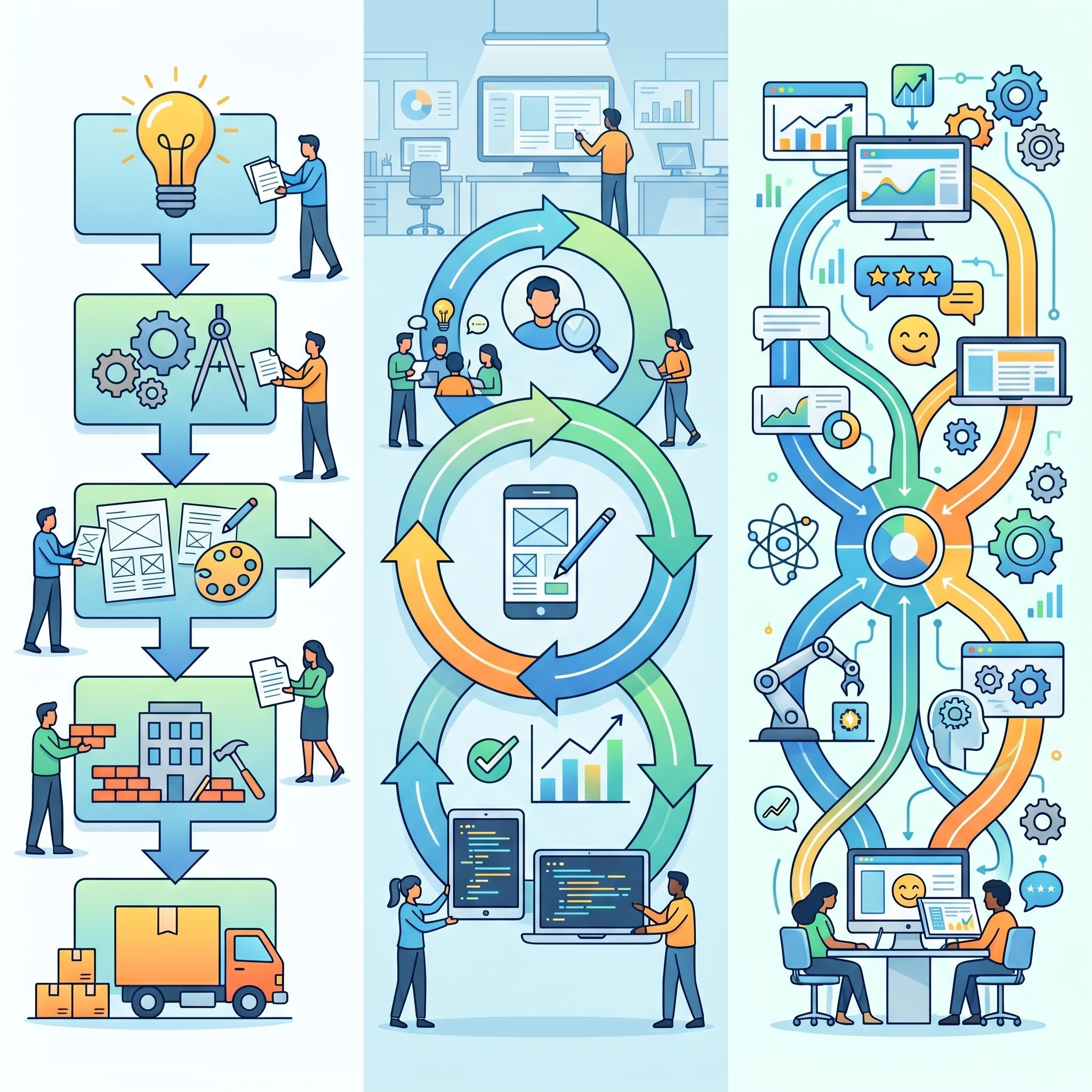 The traditional digital product design process has historically been linear and methodical. It typically starts with user research, moves into ideation and wireframing, progresses to high-fidelity prototyping, and ends with developer handoff. While effective, this step-by-step approach can be slow and rigid. Artificial intelligence is completely rewiring this sequence, turning a linear path into a dynamic, concurrent workflow.
From Manual to Automated
By 2026, the initial stages of wireframing and layout generation will be largely automated. Designers will input strategic goals, user demographics, and brand guidelines into an intelligent system. The system will then generate dozens of viable interface options within seconds. This automation does not replace the designer. It elevates their role from a creator of individual screens to a curator of user journeys.
Designers will spend their time reviewing these machine-generated concepts, selecting the most effective layouts, and refining the nuanced details that require a human touch. This shift drastically reduces the time spent on fundamental layout tasks. It allows product teams to focus their energy on high-level strategy, emotional design, and complex problem-solving that machines cannot yet replicate.
Hyper-Personalization at Scale
Another major shift in the design process is the move toward hyper-personalization. Historically, designers created a single interface intended to serve the broadest possible audience. They relied on personas and generalized user segments to make design decisions. Artificial intelligence enables interfaces to adapt to the individual user in real-time.
When a user logs into an application in 2026, the interface will analyze their past behavior, preferences, and current context. The system will automatically adjust the layout, typography, color schemes, and content hierarchy to suit that specific individual. This level of personalization requires a fundamental change in how we design. Teams will no longer create static screens. They will design flexible design systems and rule sets that guide the artificial intelligence as it generates bespoke interfaces on the fly.
Top AI in Digital Product Design Trends 2026
As we look toward 2026, several specific trends are poised to dominate the industry. These advancements represent a maturation of intelligent technology, moving from experimental capabilities to enterprise-ready solutions.
Generative UI and Adaptive Interfaces
Generative user interfaces are set to become a standard industry practice. A generative UI uses artificial intelligence to construct the visual layer of an application dynamically. Instead of hard-coding every possible screen state, teams define the core components and the logic that governs them. The AI then assembles these components based on real-time user interactions and backend data.
Adaptive interfaces take this a step further by learning from user friction. If a user repeatedly struggles to find a specific feature, the adaptive interface will recognize this pattern. It will automatically restructure the navigation menu or highlight the necessary button during the user’s next session. This continuous, automated optimization ensures that the product evolves alongside its user base, constantly improving the user experience without requiring manual design updates.
Predictive User Experience (UX)
Predictive UX leverages machine learning to anticipate what a user wants to do before they even click a button. By analyzing vast amounts of behavioral data, intelligent systems can predict the next logical action a user will take. The interface can then proactively offer shortcuts, pre-fill forms, or suggest relevant content.
This trend will heavily influence the digital product design process. Designers will need to create predictive models and map out proactive user flows. They must determine how the system should communicate its predictions to the user without being intrusive or annoying. The goal is to create an experience that feels magical and frictionless, where the software acts as an intuitive assistant rather than a static tool.
AI-Driven Accessibility Standards
Digital accessibility is a critical requirement for modern products, yet it is often treated as an afterthought. By 2026, artificial intelligence will proactively enforce accessibility standards throughout the design and development lifecycle. Intelligent plugins will analyze color contrast, typography sizes, and screen reader compatibility in real-time as the designer works.
Furthermore, these systems will automatically generate alternative text for images, suggest more inclusive language, and simulate how users with varying disabilities might interact with the product. This proactive approach ensures that digital products are inclusive by default, mitigating legal risks and expanding the potential user base. It fundamentally changes accessibility from a post-launch audit to an integrated design constraint.
Synthetic User Testing
User testing is notoriously time-consuming and expensive. Recruiting participants, conducting interviews, and analyzing the results can take weeks. In 2026, synthetic user testing will emerge as a powerful alternative. Teams will use large language models and behavioral algorithms to create digital personas that mimic their target audience.
Designers can deploy their prototypes to thousands of these synthetic users simultaneously. The system will simulate how these personas interact with the interface, identifying points of friction, confusing navigation paths, and areas where users might drop off. While synthetic testing will not entirely replace human research, it will serve as a rapid validation tool. It allows teams to test multiple iterations overnight and reserve human testing for the final, most refined versions of the product.
Transforming Digital Product Design and Development
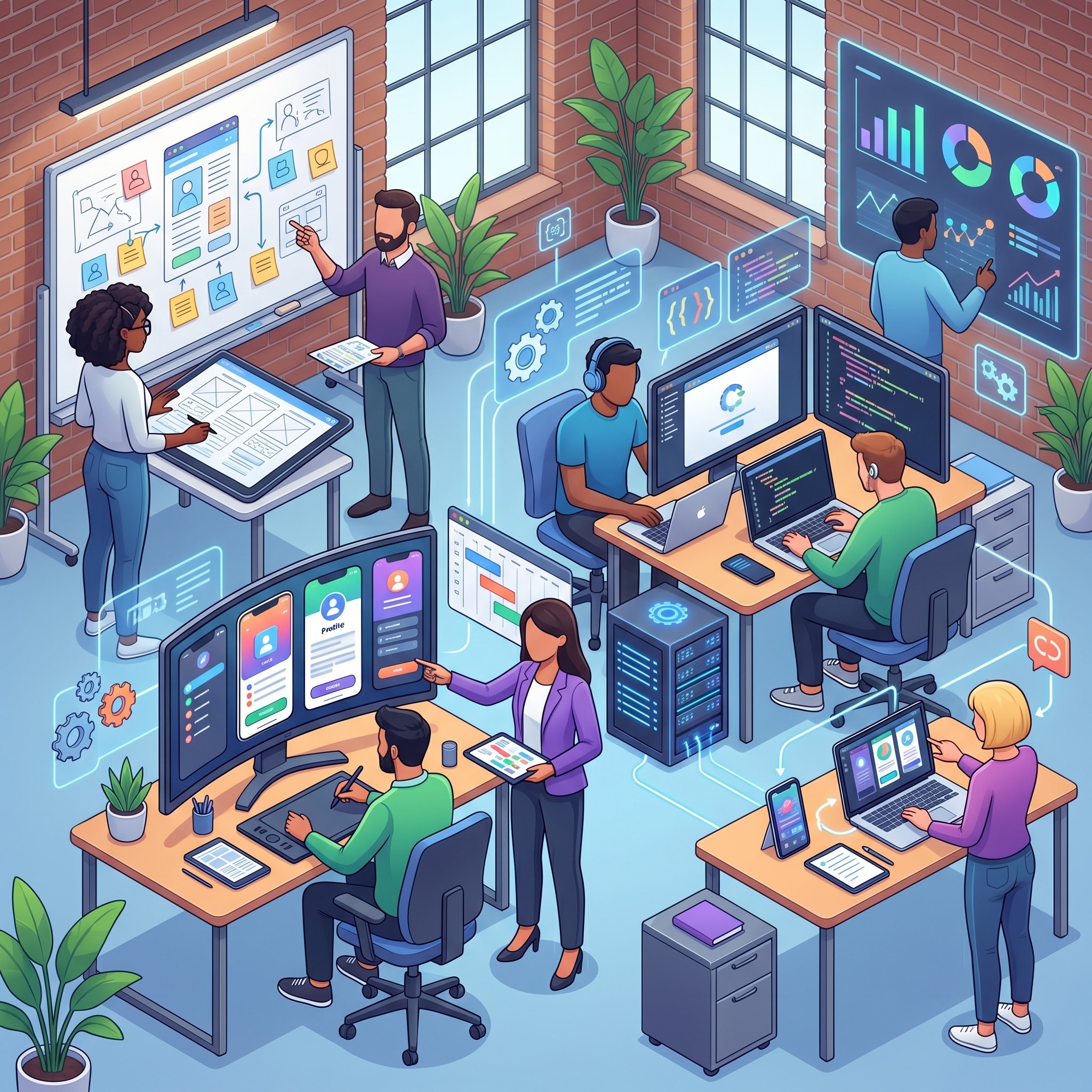 The boundary between designing a product and building it is blurring. Artificial intelligence is serving as a universal translator between visual concepts and functional code. This convergence is perhaps the most impactful trend in digital product design and development.
Bridging the Gap Between Designers and Developers
The handoff phase—where designers pass their files to developers—is traditionally fraught with miscommunication, missing assets, and technical constraints. Artificial intelligence is streamlining this transition. By 2026, design tools will automatically generate production-ready code that perfectly matches the visual intent.
These intelligent systems understand the underlying logic of design frameworks. They can convert a visual component into React, Swift, or HTML/CSS, maintaining responsive behaviors and accessibility tags. This allows developers to focus on backend architecture, security, and complex logic rather than meticulously rebuilding interface elements. It fosters a more collaborative environment where designers and engineers work within a shared, AI-assisted ecosystem.
Continuous Optimization Post-Launch
The launch of a digital product is no longer the end of the development cycle. It is the beginning of a continuous, AI-driven optimization process. Once a product is live, artificial intelligence monitors user interactions, performance metrics, and business outcomes. It identifies areas where the product is underperforming and suggests specific design interventions.
For example, if an e-commerce checkout flow has a high abandonment rate, the system might automatically generate three alternative layouts and launch an A/B test without human intervention. The AI evaluates the results, implements the winning design, and notifies the team of the change. This self-optimizing capability ensures that digital products remain highly effective and aligned with business goals long after they are initially deployed.
Preparing Your Team for 2026
 Adopting the AI in digital product design trends 2026 requires more than just purchasing new software licenses. It demands a strategic overhaul of how your team operates, thinks, and collaborates. Organizations must proactively prepare their workforce to leverage these intelligent systems effectively.
Embracing New Tooling
The toolchain used by product teams will look vastly different in a few years. Organizations must invest in platforms that natively integrate machine learning capabilities. This includes advanced design systems that can ingest rules and output responsive components, as well as analytics dashboards that provide predictive insights rather than just historical data.
Training is essential. Designers and developers need to learn how to communicate with these systems effectively. Prompt engineering, logic framing, and data interpretation will become core competencies. Teams should allocate dedicated time for experimentation, allowing practitioners to test new tools and integrate them into their existing workflows without the pressure of immediate project deadlines.
Shifting Mindsets
Perhaps the most significant challenge is the required shift in mindset. Many design professionals fear that artificial intelligence will replace their roles. Leadership must clearly communicate that AI is an augmentation tool, not a replacement. The human elements of design—empathy, emotional intelligence, strategic foresight, and brand storytelling—will become more valuable as the technical execution becomes automated.
Teams must transition from being “makers of things” to “directors of systems.” They must learn to trust the algorithms to handle the repetitive tasks while they focus on the overarching vision. Cultivating a culture of continuous learning and adaptability will be the defining characteristic of successful product teams in 2026.
Frequently Asked Questions (FAQ)
What is AI in digital product design?
AI in digital product design refers to using artificial intelligence tools and machine learning systems to improve design workflows, automate repetitive tasks, personalize user experiences, and optimize digital interfaces. These technologies help teams create faster, smarter, and more efficient digital products with improved usability.
How will AI change the digital product design process by 2026?
By 2026, AI will automate many early-stage design tasks such as wireframing, layout generation, accessibility checks, and testing. Designers will focus more on strategy, creativity, and user psychology while intelligent systems handle repetitive production and optimization work throughout the design lifecycle.
What are adaptive interfaces in digital product design?
Adaptive interfaces use artificial intelligence to modify layouts, navigation, and content based on user behavior and preferences. These systems learn from user interactions and continuously improve the experience automatically, helping digital products become more personalized, efficient, and user-friendly over time.
Will artificial intelligence replace digital product designers?
Artificial intelligence is unlikely to fully replace digital product designers because human creativity, empathy, and strategic thinking remain essential. Instead, AI acts as a collaborative assistant that automates technical and repetitive tasks, allowing designers to focus on innovation, storytelling, and complex problem-solving.
What is predictive user experience (UX)?
Predictive UX uses machine learning and behavioral analysis to anticipate what users want before they take action. Interfaces can suggest content, automate tasks, or simplify navigation based on previous interactions, creating smoother and more personalized digital experiences for individual users.
The Future of Design is Collaborative
The landscape of digital product design and development is moving toward an unprecedented level of synergy between human creativity and machine intelligence. The AI in digital product design trends 2026 highlight a future where interfaces are adaptive, inclusive, and continuously optimizing. The digital product design process will shed its rigid, linear constraints, evolving into a rapid, fluid collaboration.
To thrive in this new environment, organizations must rethink their workflows, invest in intelligent tooling, and empower their teams to focus on strategy and empathy. The technology is rapidly maturing, and the companies that integrate these capabilities into their core operations today will define the user experiences of tomorrow. Start auditing your current design pipeline, identify areas ripe for automation, and begin training your team to orchestrate the intelligent systems that will shape the next generation of digital products.


