
The rules of digital design are being rewritten. Not gradually, not incrementally—but at a pace that’s forcing designers, product teams, and businesses to fundamentally rethink how they engage with users online. Interactive digital design, once defined by clickable buttons and scrolling web pages, now encompasses everything from immersive 3D environments to AI-personalized interfaces that adapt in real time.
We’re at a turning point. The expectations users bring to digital products have shifted dramatically. A static, one-size-fits-all interface no longer cuts it. People expect experiences that respond, adapt, and feel intuitive—almost as if the product knows them. That pressure is reshaping how design teams work, what digital product design ideas get greenlit, and how organizations invest in digital product design consulting.
This post digs into where interactive digital design is heading, what forces are driving that change, and what it means for designers and businesses building for the future. By the end, you’ll have a clear picture of the trends defining the next era of digital design—and the practical steps to stay ahead of them.
Why Interactive Digital Design Is Evolving So Rapidly
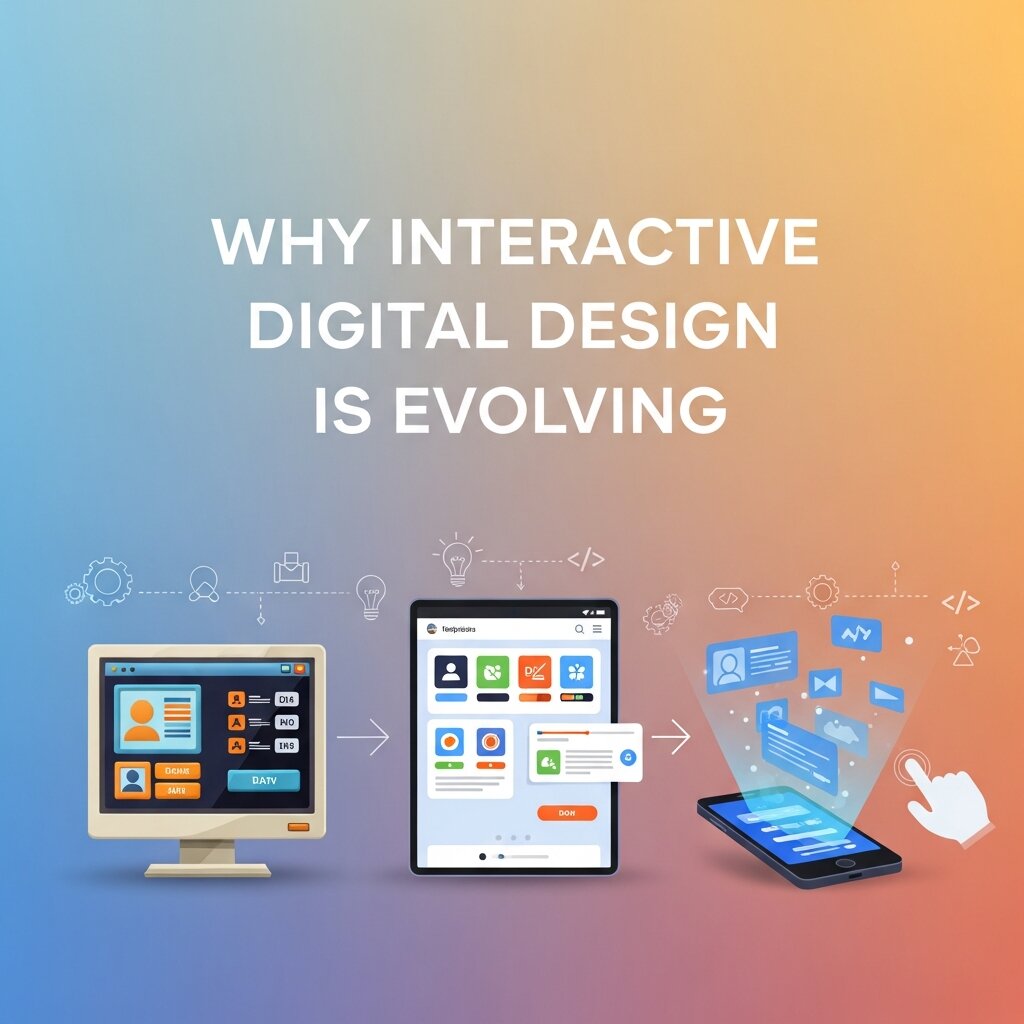 Several converging forces are pushing interactive digital design into new territory. Hardware has gotten more powerful and more diverse. Smartphones, tablets, wearables, smart TVs, and AR headsets all demand design systems that flex across vastly different screen sizes, input methods, and contexts of use.
At the same time, user behavior has changed. Attention spans are shorter, expectations are higher, and competition for engagement is fiercer than ever. A user who encounters friction—a confusing navigation flow, a slow-loading animation, a form that’s hard to complete on mobile—will leave. Fast.
There’s also a philosophical shift happening within the design community itself. The field has moved beyond aesthetics. Today’s interactive digital design is deeply rooted in psychology, data, and systems thinking. Designers aren’t just making things look good; they’re crafting behavioral pathways, emotional responses, and measurable outcomes.
This evolution has elevated the role of digital product design consulting, with more organizations bringing in external expertise not just to build interfaces, but to rethink entire product strategies.
How AI Is Reshaping the Interactive Design Process
Artificial intelligence is arguably the single biggest disruptor in interactive digital design today. Its impact is being felt at two levels: in the tools designers use and in the experiences they create.
How AI design tools are changing the way teams work
AI-powered tools are accelerating workflows that used to take weeks. Generative design platforms can now produce layout variations, suggest color systems, and prototype interactions from a simple brief. Tools like Figma’s AI features, Adobe Firefly, and Uizard are giving designers the ability to iterate faster—spending less time on repetitive tasks and more on the creative and strategic decisions that actually require human judgment.
This doesn’t mean designers are being replaced. It means the baseline has risen. Teams that once needed large headcounts to produce polished digital products can now move faster with leaner structures, provided those teams are fluent in AI-augmented workflows.
What AI-personalized interfaces mean for users
On the user-facing side, AI is enabling a new class of adaptive interfaces. These are digital products that change based on individual user behavior—surfacing relevant content, adjusting navigation structures, or modifying the visual hierarchy based on what a user is most likely to need next.
Spotify’s interface, for example, isn’t the same for every user. Netflix surfaces different content based on viewing history. These aren’t just recommendation engines—they represent a broader design philosophy where the interface itself becomes dynamic. As AI capabilities mature, this kind of personalization will extend to far more product categories.
The Rise of Immersive and Spatial Design
 Flat, screen-bound interfaces are no longer the only canvas for interactive digital design. The growing adoption of augmented reality (AR), virtual reality (VR), and mixed reality (MR) is opening up entirely new spatial dimensions for designers to work within.
Apple’s Vision Pro, released in 2024, brought spatial computing into mainstream conversation. Meta continues to invest heavily in its Quest ecosystem. And while mass consumer adoption of AR/VR is still unfolding, the design community is already grappling with what it means to build interactions for three-dimensional, gesture-based environments.
Spatial design introduces challenges that 2D design simply doesn’t have. Depth, scale, field of view, and physical comfort all become design variables. Typography behaves differently. Navigation requires a complete rethink. Designers who want to stay relevant in the next decade will need to understand these principles—and many are already seeking out digital product design books and courses that cover spatial UX specifically.
For businesses, this trend signals an opportunity. Brands that begin experimenting with immersive digital experiences now—even at small scale—will be better positioned as the technology reaches broader audiences.
Motion, Micro-Interactions, and the Language of Feedback
One of the most significant shifts in interactive digital design over recent years is the growing sophistication of motion and micro-interactions. These are the small, intentional animations that tell users something has happened: a button that pulses when clicked, a form field that shakes when an error occurs, a progress indicator that smoothly fills as a file uploads.
These details matter far more than they might seem. Research from Nielsen Norman Group consistently shows that feedback—visual confirmation that an action has been registered—reduces user anxiety and increases confidence in a product. Motion, done well, makes a digital product feel alive.
The challenge is restraint. Overloaded animations create cognitive noise and slow performance. The best interactive digital design uses motion purposefully, with each animation tied to a clear communicative function. This requires both technical skill and design judgment—two qualities that remain distinctly human, regardless of how advanced AI tools become.
Accessibility Is No Longer Optional
Accessible design has been a best practice for years, but it’s increasingly becoming a baseline requirement. Regulatory pressure is mounting—particularly in Europe, where the European Accessibility Act came into effect in 2025, requiring many digital products and services to meet accessibility standards. Similar legislation exists or is developing in other regions.
Beyond compliance, accessibility is good design. Designing for users with visual, motor, or cognitive impairments typically produces cleaner, more usable experiences for everyone. High contrast ratios improve readability in bright sunlight. Clear, logical navigation helps users who are in a hurry or distracted. Keyboard-navigable interfaces work better for power users.
Digital product design consulting firms are increasingly fielding requests specifically around accessibility audits and remediation. For businesses, proactive investment in accessible design is far less expensive than reactive fixes after regulatory scrutiny—or worse, after users call it out publicly.
The Intersection of Design and Product Strategy
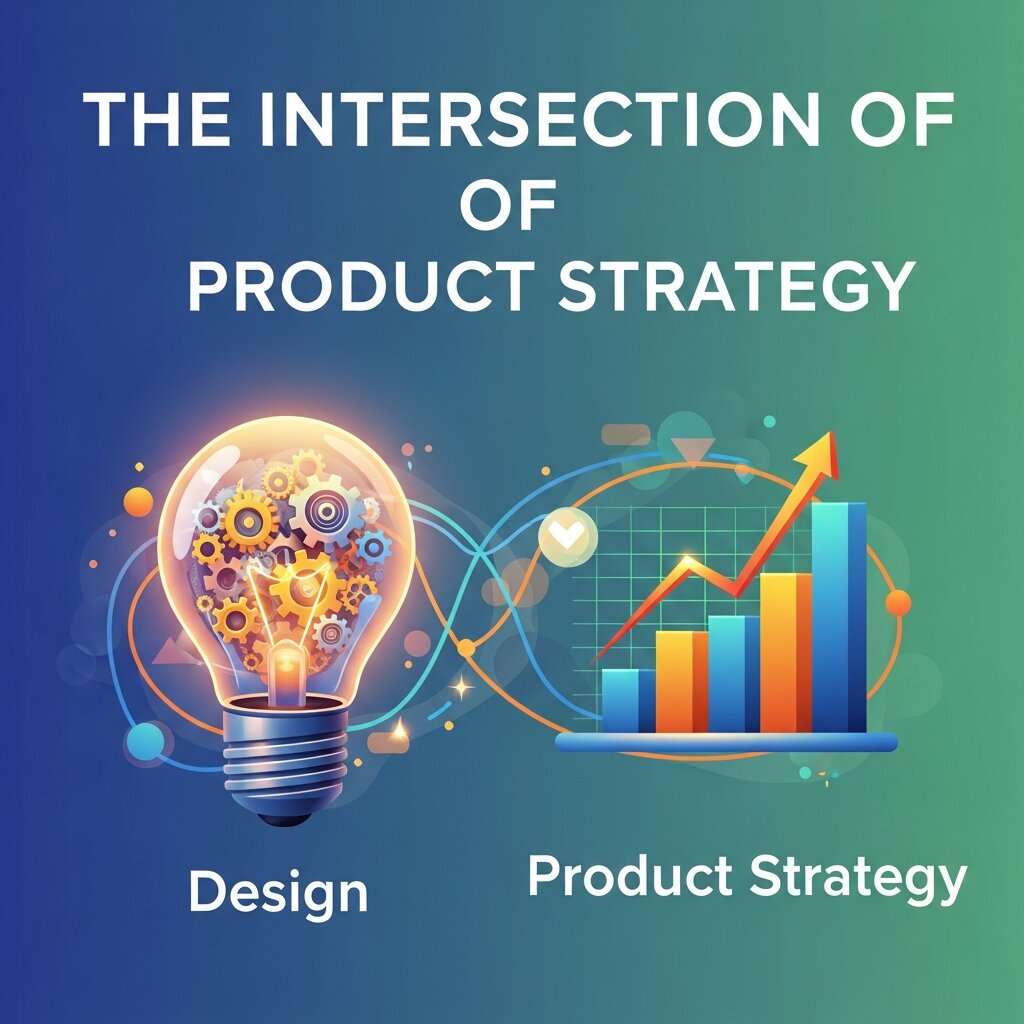 Interactive digital design is no longer a downstream deliverable that happens after strategy has been set. At the most effective organizations, design sits at the table from the start. Design thinking frameworks—once considered niche—are now core to how product teams at companies like Google, Airbnb, and IBM approach problem-solving.
This shift has elevated the profile of digital product design consulting as a strategic function. Businesses are no longer hiring design partners simply to execute a visual spec. They’re bringing them in to help define the problem, shape the product direction, and ensure that user experience considerations are built into the roadmap from day one.
For designers, this shift in positioning requires a broader skill set. Understanding business metrics, being able to speak the language of product and engineering, and making data-informed decisions are now as important as mastery of design tools. The best interactive digital designers of the next decade will operate at the intersection of craft, strategy, and technology.
Designing for Trust in a Skeptical Digital Environment
There’s a growing design challenge that doesn’t get discussed enough: trust. Users have become more skeptical of digital products. Data breaches, manipulative dark patterns, and the spread of AI-generated misinformation have all contributed to a climate where users scrutinize the products they engage with more carefully.
This creates a design imperative. Transparent data practices, clear privacy controls, honest feedback mechanisms, and interfaces that don’t exploit cognitive biases aren’t just ethical choices—they’re competitive advantages. Brands that design with integrity build stronger user relationships and face fewer regulatory risks.
The most thoughtful digital product design ideas coming out of the field today are grappling with these questions directly. How do you design a notification system that’s useful without being manipulative? How do you present AI-generated content honestly? How do you build consent flows that are genuinely informative rather than deliberately confusing?
These are hard design problems. But they’re the ones that will define which digital products earn lasting user loyalty.
FAQ: Interactive Digital Design
1. What is interactive digital design?
Interactive digital design is the process of creating digital experiences that allow users to actively engage with content through clicks, gestures, animations, forms, and other interactive elements. It combines design, technology, and user experience principles to create intuitive and engaging products.
2. Why is interactive digital design important?
Interactive digital design improves user engagement, increases customer satisfaction, and helps businesses stand out in competitive markets. Well-designed interactions make websites, apps, and digital products easier to use and more enjoyable for users.
3. How is interactive digital design different from traditional digital design?
Traditional digital design often focuses on static visuals, while interactive digital design emphasizes user actions and responses. It includes animations, transitions, personalized interfaces, and dynamic elements that adapt to user behavior.
4. What skills are essential for interactive digital designers?
Successful interactive digital designers need skills in user experience (UX), user interface (UI) design, prototyping, motion design, accessibility, design thinking, and an understanding of emerging technologies like AI and AR/VR.
5. How is artificial intelligence changing interactive digital design?
AI is transforming interactive digital design by automating repetitive tasks, generating design variations, and enabling personalized user experiences. AI-powered interfaces can adapt content, layouts, and recommendations based on individual user behavior.
6. What role do micro-interactions play in digital design?
Micro-interactions provide instant feedback to users through small animations or visual cues, such as button effects, loading indicators, or error messages. They improve usability, reduce confusion, and make digital experiences feel more responsive.
7. Why is accessibility important in interactive digital design?
Accessibility ensures that digital products are usable by everyone, including people with disabilities. Features like keyboard navigation, readable typography, proper contrast ratios, and screen reader compatibility create better experiences for all users.
8. What are some examples of interactive digital design?
Examples include interactive websites, mobile applications, online learning platforms, e-commerce stores, video streaming services, virtual reality experiences, and AI-powered chat interfaces that adapt to user preferences.
9. What tools are commonly used for interactive digital design?
Popular tools include Figma, Adobe XD, Sketch, Adobe Firefly, Uizard, InVision, and Framer. These platforms help designers create wireframes, prototypes, animations, and interactive user experiences efficiently.
10. What is the future of interactive digital design?
The future of interactive digital design will focus on AI-driven personalization, immersive AR and VR experiences, spatial computing, ethical design practices, and highly accessible interfaces.
What the Next Era of Interactive Digital Design Demands
Interactive digital design is becoming more technical, more strategic, more personalized, and more ethically complex—all at the same time. The designers and organizations that thrive in this environment will be those who embrace that complexity rather than trying to simplify it away.
For individuals, that means continuous learning. The digital product design books, courses, and communities that help practitioners develop skills in AI-augmented workflows, spatial design, accessibility, and design strategy will be invaluable investments. The field moves fast, and professional growth requires intentional effort.


